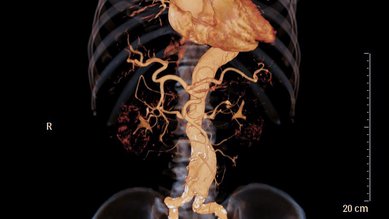
ICD-Code I71.6: Thoracoabdominal aortic aneurysm, without mention of rupture
Your aorta in your chest and abdomen is enlarged.
The aorta carries the blood from the heart to the body. The aorta begins at the heart itself. First it runs upwards and then it arches down through the chest to the abdomen. At approximately the level of the navel, the aorta branches into 2 large blood vessels. These blood vessels first run to the pelvis and then to the legs.
The aorta can enlarge, for instance, if deposits have formed on the aortic wall or if the wall of the aorta is less firm than normal.
You may not at first notice any enlargement of the aorta. However, pain and circulatory problems can also occur. If the aorta is enlarged, there is also a risk of the wall of the aorta rupturing. This means that blood can flow into the chest or abdomen. This can be painful and life-threatening.
Note
This information is not intended for self-diagnosis and does not replace professional medical advice from a doctor. If you find an ICD code on a personal medical document, please also note the additional indicator used for diagnostic confidence.Your doctor will assist you with any health-related questions and explain the ICD diagnosis code to you in a direct consultation if necessary.
Additional indicator
On medical documents, the ICD code is often appended by letters that indicate the diagnostic certainty or the affected side of the body.
- G: Confirmed diagnosis
- V: Tentative diagnosis
- Z: Condition after
- A: Excluded diagnosis
- L: Left
- R: Right
- B: Both sides
Source
The explanation of the ICD code was provided by the non-profit organization “Was hab’ ich?” gemeinnützige GmbH on behalf of the Federal Ministry of Health (BMG).