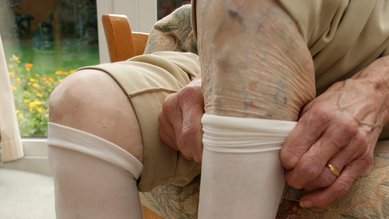
ICD-Code I80.1: Phlebitis and thrombophlebitis of femoral vein
Veins in your femur are inflamed or have been blocked by blood clots.
Veins are blood vessels that transport the blood back to the heart.In the leg there is a distinction between deep veins and veins beneath the skin. The veins beneath the skin gather the blood from the skin and carry some of the blood to the deeper veins. The deep veins also collect the blood from the muscles. The deep veins then carry the blood towards the heart. There are deep veins in the femur for this purpose. A large vein deep in your femur is affected.
Blood clots occur when various components of the blood clump together. A blood clot can partially or completely block a blood vessel. If veins get blocked by blood clots, the blood is unable to flow properly. Then, as a result of the blocked veins, the skin can turn red and swell up. The affected area may be painful or take on a bluish color. There are various reasons for blood clots forming. If someone is unable to move their legs properly, or if the blood vessel wall has been injured, a blood clot can form more quickly. Some people are prone to blood clots. This is then congenital or caused by another disorder. Inflammations in the veins can also favor the formation of blood clots.
There are various reasons for inflammation of the veins. Inflammation of the veins can be caused by pathogenic microorganisms. Inflammation can cause the veins to turn red and harden. The affected area may feel hot and be painful.
Note
This information is not intended for self-diagnosis and does not replace professional medical advice from a doctor. If you find an ICD code on a personal medical document, please also note the additional indicator used for diagnostic confidence.Your doctor will assist you with any health-related questions and explain the ICD diagnosis code to you in a direct consultation if necessary.
Additional indicator
On medical documents, the ICD code is often appended by letters that indicate the diagnostic certainty or the affected side of the body.
- G: Confirmed diagnosis
- V: Tentative diagnosis
- Z: Condition after
- A: Excluded diagnosis
- L: Left
- R: Right
- B: Both sides
Source
The explanation of the ICD code was provided by the non-profit organization “Was hab’ ich?” gemeinnützige GmbH on behalf of the Federal Ministry of Health (BMG).