Healthy living Ozone: both protective shield and irritant gas
There are two sides to ozone. The ozone layer (“stratospheric” ozone) in the earth’s atmosphere provides the earth with essential protection against UV radiation. However, ground-level (“tropospheric”) ozone can cause health problems. This article describes how and when ozone is produced and what you can do to avoid potentially harmful effects on your health.
At a glance
- Ozone is a gas that is present in various layers of the atmosphere.
- Ground-level ozone is formed in the presence of intense sunlight, mainly on hot, sunny days.
- Ozone levels vary from region to region because ozone formation depends on weather conditions and on the balance between various air pollutants.
- The short-term effects of ground-level ozone on health include eye irritation, headaches and a worsening of existing respiratory problems and allergies.
- People who are especially sensitive to ozone, those with respiratory diseases and children in particular should protect themselves against high ozone levels.
Note: The information in this article cannot and should not replace a medical consultation and must not be used for self-diagnosis or treatment.


What is ozone?
Ozone (O3) is a colorless, toxic gas. Ozone consists of three oxygen atoms, whereas oxygen in the air (O2) consists of two oxygen atoms. Unlike oxygen, direct exposure to ozone can be harmful to people.
Ozone is divided into stratospheric and ground-level (or tropospheric) ozone. The ozone at ground level is harmful to health, while the ozone in the stratosphere (which begins 10 kilometers above the earth) has a very important function: the ozone layer shields the earth and its population from particularly high-energy harmful ultraviolet (UV) radiation from the sun. Without this protective shield solar radiation on the earth would be so strong that life would be impossible.
The ozone layer can be damaged by certain pollutants, particularly chlorofluorocarbons (CFCs), causing an ozone hole to form. This means that more UV radiation reaches the earth, causing people to sunburn more quickly and increasing the risk of skin cancer. The increase in solar radiation can also cause damage to the eyes.
What causes ground-level ozone?
Ground-level ozone is a major component of “summer smog”. Ozone is formed by chemical reactions between pollutants such as nitrogen oxides and volatile organic compounds in the presence of intense sunlight.
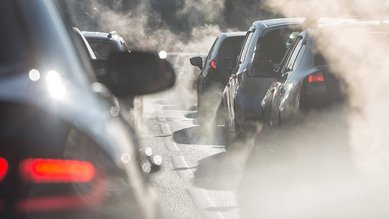
These pollutants are mainly produced by human activities, particularly road traffic and the solvents in products such as paint, lacquer, adhesives and cleaning products. However, some of these volatile organic compounds (VOCs) are also released by natural processes.
The following two conditions are required for ozone to form:
- the presence of certain air pollutants
- intense sunshine
If these conditions are met, ozone concentrations can rise in the lower atmosphere during prolonged periods of sunny weather.
When are ozone levels at their highest?
Ozone levels are generally highest from May to September. However they also vary based on the time of day: ozone production starts in the morning, reaching its maximum between 2 p.m and 5 p.m. Ozone is then broken down overnight by natural chemical reactions. Ozone levels are therefore lowest in the early hours of the morning.

Where are ozone levels at their highest?
Contrary to what one might think, the highest ozone levels do not occur in cities where most air pollutants are produced, but tend to occur in suburban and rural areas. One reason for this is that vehicle emissions, which are largely produced in urban areas, also contain nitric oxide (NO). Some of the ozone formed from reactions involving nitrogen dioxide (NO2) is broken down in the presence of nitric oxide (NO).
How do ozone levels vary over time?
Thresholds and target values
Peak ozone levels, expressed as hourly mean values, are measured in addition to daily and annual mean values. These are particularly relevant for health. The general public is informed if the hourly mean ozone level reaches 180 micrograms per cubic meter. This level is known as the information threshold. When this is reached, behavioral recommendations are published in the media. These recommendations apply in particular to people who are sensitive to ozone or have underlying illnesses.
An hourly mean value of 240 micrograms per cubic meter is referred to as the alert threshold. The public is asked to exercise particular caution if this is reached. The alert threshold has only been reached in Germany on rare occasions so far.
However, the target for ozone concentration targets is still being exceeded in many areas. To limit ozone pollution, Europe has set a common long-term target for ozone concentration. The target is for the 8-hour mean to exceed 120 micrograms per cubic meter on no more than 25 days per year.
Readings
Ozone concentrations are monitored at around 260 monitoring stations in Germany. Since 1990, there has been a decline in the number of times information and alert thresholds are reached compared with the pre-1990 period. This is largely due to the fact that the levels of air pollutants that contribute to ozone formation have decreased in Germany since then.
Contrary to the positive trends for the information and alert thresholds, annual averages have increased somewhat since 1990. This is due to global levels of ozone precursor pollutants. While levels of these pollutants have declined in Germany, they continue to increase globally.
How does climate change affect ozone formation?
There are clear signs of climate change in Germany in the form of hotter summers and the rise in average annual temperatures. Climate models predict that air pollution in the summer (“summer smog”) caused by ozone will increase. High air temperatures over several days tend to favor the production of ozone. The main reason for this is that chemical reactions speed up at higher temperatures. For example, more volatile organic compounds, potential precursors to ozone, are produced in hot weather.
Information and alert thresholds are increasingly being exceeded on hot days when temperatures reach 30°C or higher. The “ozone season” can also be extended if the weather stays warm and sunny into the autumn.
Video What impact does climate change have on health?
This video shows how some conditions are spreading as a consequence of climate change. Rising temperatures have consequences for people’s health.
This and other videos can also be found on YouTube
Watch nowThe privacy policy indicated there applies.
Climate change is harmful to health and well-being because of heatwaves and periods of drought, but also because of rising ozone levels.
How does ozone affect health?
Since ozone is an irritant gas, it can cause various forms of irritation. These include watery eyes, respiratory problems such as coughing or a sore throat as well as headaches. The severity of these symptoms depends on the amount of time the person is exposed to high ozone levels. Breathing more frequently and more deeply during strenuous physical exertion also increases the amount of ozone reaching the lungs. This can impair lung function and restrict physical performance. These symptoms generally clear up within 48 hours.

How can you protect yourself against high ozone levels?
Ozone levels in Germany have so far only reached levels that present a risk to health on rare occasions. However, rising temperatures in the future may lead to greater ozone formation, as high temperatures can increase the emission of volatile compounds from solvents or environmental sources. It is therefore still essential to reduce the formation of ground-level ozone as much as possible.
Many people are particularly sensitive to ozone and so there are a few things they need to consider even when ozone levels are only slightly elevated to protect their health and wellbeing. This is the case in particular for people with respiratory diseases. Babies and young children also need extra protection. Everyone is advised to take the following measures when the alert threshold is reached, or earlier if possible:
- Do physically demanding activities such as sports in the morning, when ozone levels are lowest.
- Ventilate your home mainly in the morning.
- Spend as little time outdoors as possible around midday and in the afternoon, as this is when ozone levels are at their highest.
Where can I find information on current ozone levels?
The Federal Environment Agency (Umweltbundesamt) website publishes daily air pollution levels (ozone, particulate matter and nitrogen dioxide) by region.
- Frank U, Ernst D. Effects of NO2 and Ozone on Pollen Allergenicity. Front Plant Sci 2016. 7:91. doi: 10.3389/fpls.2016.00091.
- Kazi DS et al. Climate Change and Cardiovascular Health: A Systematic Review. JAMA Cardiol. 2024 Aug 1;9(8):748-757. doi: 10.1001/jamacardio.2024.1321.
- Russo RC et al. Ozone-induced lung injury and inflammation: Pathways and therapeutic targets for pulmonary diseases caused by air pollutants. Environ Int. 2025 Apr:198:109391. doi: 10.1016/j.envint.2025.109391.
- Senatsverwaltung für Mobilität, Verkehr, Klimaschutz und Umwelt Berlin: Empfehlungen bei hohen Ozon-Konzentrationen. Aufgerufen am 13.11.2025.
- Umweltbundesamt. Gesundheitsrisiken durch Ozon. Aufgerufen am 13.11.2025.
- Umweltbundesamt. Luftqualität 2024, vorläufige Auswertung. 02.2025.
- Umweltbundesamt. Ozon. Aufgerufen am 13.11.2025.
- Umweltbundesamt. Ozon-Belastung. Aufgerufen am 13.11.2025.
- Weltgesundheitsorganisation (WHO). WHO global air quality guidelines: particulate matter (PM2.5 and PM10), ozone, nitrogen dioxide, sulfur dioxide and carbon monoxide. 2021.
- Zhang JJ, Wei Y, Fang Z. Ozone Pollution: A Major Health Hazard Worldwide. Front Immunol 2019. 10: 2518. doi: 10.3389/fimmu.2019.02518.
- Zheng X et al. Short-term exposure to ozone, nitrogen dioxide, and sulphur dioxide and emergency department visits and hospital admissions due to asthma: A systematic review and meta-analysis. Environ Int. 2021 May:150:106435. doi: 10.1016/j.envint.2021.106435.
As at: