Healthy living Air quality indoors: why ventilation is important
The air in many homes in Germany is contaminated with pollutants such as mold, particulate matter and radon. Discover which other substances can affect indoor air quality and how you can protect yourself.
At a glance
- Pollutants in the indoor air primarily come from building materials, cleaning agents and furniture.
- Pollutants can also be produced by moisture and combustion processes such as cooking or smoking.
- Poor air quality in homes can, among other things, contribute to the development of respiratory diseases, allergies and cancer.
- However, health conditions that are directly caused by indoor air pollution are rare in Germany.
- Simple measures such as briefly opening windows to air rooms out can improve indoor air quality.
Note: The information in this article cannot and should not replace a medical consultation and must not be used for self-diagnosis or treatment.


What influences indoor air quality?
Indoor air is usually not completely free of harmful substances. Cooking, cleaning and other activities release pollutants into the air in the form of gases, vapors and dust. In particular, building materials and new furniture often release harmful chemicals into the air. Smoking also creates pollutants.
In addition, particulate matter from contaminated outdoor air can also enter buildings.
However, taking a few important protective measures can usually reduce pollutant levels to a safe level.

Where do indoor pollutants come from?
The pollutants in indoor air can come from very different sources both within and outside buildings.
Chemical substances
Chemical substances can be released from cleaning and maintenance products, furniture, joints and building materials, especially during renovations. Examples of harmful chemical substances include:
- Formaldehyde, for example, from tobacco smoke, building materials or adhesives used in furniture
- Terpenes, for example, from wood paneling, cleaning agents or cosmetics
- Asbestos, which was primarily used in older building materials, such as sealants and joint compounds
- Polycyclic aromatic hydrocarbons (PAHs), for example, from adhesives or sealants
- Polychlorinated biphenyls (PCBs), for example, from old dyes and joint sealants
- Volatile organic compounds (VOCs), which may be released, for example, from solvents, paints, combustion processes or natural sources
- Plasticizers and flame retardants, for example, from PVC-containing materials, floor coverings and furniture
Radioactive substances
The radioactive gas radon is produced from uranium in the soil and mainly accumulates in the lower floors of buildings. It forms in uranium-containing rocks, which are more common in some regions than others, particularly in low and high mountain ranges. As a result, higher concentrations of radon are often found in these areas.
Exhaust gases, particulate matter and microplastics
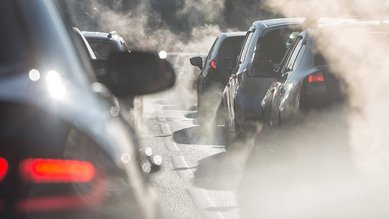
Outdoor air can pollute indoor air, for example, through exhaust gases and particulate matter. This is particularly likely if people live on the ground floor near a busy road. In addition, all indoor combustion processes release pollutants into the air. The main cause of this type of pollution is smoking. Tobacco smoke is one of the most harmful air pollutants. However, pollutants are also released from fireplaces and candles, and during cooking, especially when using gas.
Both outdoor and indoor air also contain microplastics. These are tiny particles of plastic that are not visible to the naked eye. These particles are used in the manufacture of plastic products, cosmetics and textiles. They are also released as a result of wear on plastic products. The main indoor sources of microplastics are everyday items made from plastic and textiles containing plastic. The risks presented by microplastics for human health are not yet fully understood. Restrictions and bans on the use of microplastics were introduced by the European Commission in 2023.
Allergens
Various allergy-causing substances (allergens) can enter indoor air: dust mites can be found almost everywhere in the home, especially in textiles and bedding, and can be disturbed by air currents. Many people have allergic reactions to these. Pet allergens are another example. These can also spread through tiny, floating particles in indoor air.
Excessively high humidity indirectly affects the air by causing mold to form. This can happen, in particular, as a result of people showering, washing and drying laundry. Mold spores are stirred up by air movements and distributed through the room. Mold can cause allergies and respiratory diseases.
Infectious aerosols
A further risk in relation to indoor air is that of infectious aerosols, which enable the transmission of various pathogens – especially bacteria and viruses. Aerosols are microscopic droplets that can contain pathogens. They are released into the air when people breathe, speak or sing and are so light that they remain suspended in the air for extended periods. When people are infected with a virus, such as the SARS-CoV-2 coronavirus indoor air can become contaminated with the virus, particularly in poorly ventilated areas. If a healthy person inhales this air, there is a higher risk of infection.
Overview of pollutants and their sources
A detailed overview of key pollutants and their sources can be found in this table, taken from an article from the German public health journal “Bundesgesundheitsblatt” on indoor pollutants.
What are the health risks?
The health risks of pollutants in indoor air can vary considerably between buildings and between regions in Germany. The risks particularly depend on the materials installed, the furniture and the residents’ habits. The risk of illness only increases if the pollutants reach a certain concentration.

Poor indoor air quality can increase the risk of the following illnesses and health conditions:
- allergies: for example, due to dust mites, pets and mold
- a weakened immune system: for example, due to mold and polychlorinated biphenyls
- cancer: for example, due to radon, particulate matter and formaldehyde
- skin, eye, nose and throat irritation as well as headaches: due to various chemical compounds
- respiratory disorders: especially due to nitrogen dioxide (exhaust gases and gas stoves), carbon monoxide (exhaust gases, wood-burning and coal-fired stoves), mold and particulate matter
- infectious diseases: in particular, those caused by viruses that can be transmitted through the air
Every year, about 3.2 million people worldwide die as a result of indoor air pollution. 21 percent of these die from pneumonia, 32 percent from coronary heart disease, 19 percent from chronic-obstructive pulmonary disease (COPD), 23 percent from stroke and 6 percent from lung cancer.
Who is particularly at risk?
Infants, children and older people as well as people with respiratory conditions, heart conditions or an immunodeficiency are at higher risk from polluted indoor air. One reason for this is that their immune system is often weaker.
In addition, pregnant women should not be exposed to excessively high levels of air pollution. The pollutants can be passed on and pose health risks to the unborn child.
How can people protect themselves?
Shock ventilation and cross-ventilation
Ventilation plays a key role in improving the air quality in homes. This is particularly important just after renovations as it effectively reduces the level of gaseous chemical substances. Ventilation is also important after cooking, showering and cleaning, as well as when smoking or burning candles.
As a general rule, homes should be ventilated for at least 5 minutes several times a day. Shock ventilation and cross-ventilation are particularly effective. Shock ventilation means opening windows wide for a few minutes to allow the indoor air to be quickly replaced by fresh air. Cross-ventilation means opening windows on both sides of the home to create a through-draft.
The risk of infection with viruses like SARS-CoV-2 can also be reduced through ventilation. In addition, good cough and sneeze etiquette should be observed in indoor areas, which means coughing or sneezing into the crook of the arm. This reduces the spread of viruses through the room.
Removing dust
Ventilation can only reduce the levels of airborne substances. It cannot remove heavier substances, which often become trapped in household dust. Any dust should therefore be wiped away regularly. A damp cloth is usually enough. Cleaning agents are not essential.
If you suspect high pollutant levels
If you have health problems that may be caused by air pollutants in your home, start by consulting your family doctor. Check your living spaces for potential sources of pollution.
More information about steps you can take to avoid indoor pollutants is available from the consumer advice center for North Rhine-Westphalia.
- Birmili W, Kolossa-Gehring M, Valtanen K et al. Schadstoffe im Innenraum – aktuelle Handlungsfelder. Bundesgesundheitsbl 61, 656–666 (2018).
- Bundesamt für Strahlenschutz (BfS). Radon. Aufgerufen am 06.10.2025.
- Bundesinstitut für Risikobewertung (BfR). Mikroplastik: Fakten, Forschung und offene Fragen. Aufgerufen am 06.10.2025.
- European Environment Agency. Impacts of microplastics on health. Stand: 19.09.2025. Aufgerufen am 06.10.2025.
- Scientific Committee on Health and Environmental Risks (SCHER) und European Commission. Opinion on risk assessment on indoor air quality. Online-Publikation. 07.2007.
- Umweltbundesamt - Bundesministerium für Umwelt, Klimaschutz, Naturschutz und nukleare Sicherheit (BMUKN). Flüchtige organische Verbindungen. Aufgerufen am 06.10.2025.
- Umweltbundesamt - Bundesministerium für Umwelt, Klimaschutz, Naturschutz und nukleare Sicherheit (BMUKN). Ausschuss für Innenraumrichtwerte (vormals Ad-hoc-Arbeitsgruppe). Aufgerufen am 06.10.2025.
- Umweltbundesamt - Bundesministerium für Umwelt, Klimaschutz, Naturschutz und nukleare Sicherheit (BMUKN). Mikroplastik. Aufgerufen am 06.10.2025.
- Weltgesundheitsorganisation (WHO). Housing and health guidelines. Genf 2018. ISBN 978-92-4-155037-6. Lizenz: CC BY-NC-SA 3.0 IGO.
- Weltgesundheitsorganisation (WHO). Household air pollution. Stand: 16.10.2024. Aufgerufen am 06.10.2025.
As at: