Healthcare Self-help and self-help groups for young people
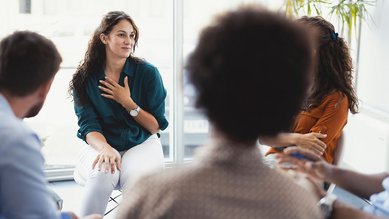
Self-help groups for young people allow them to share their experiences and find mutual support to help them deal with a chronic illness, disability or addiction problem. Meetings may be held in a range of different ways – such as group meet-ups, online meetings or group activities.
At a glance
- Self-help groups for young people allow young people with similar chronic health conditions, disabilities or addiction problems to make connections and support each other.
- Self-help groups for adolescents and young adults provide a forum in which to explore topics that young people prefer to discuss with people of a similar age.
- Self-help for young people may be available in the form of fixed groups or in unconventional formats outside of the usual structures.
- Special web portals and self-help contact points help people find a group to suit them.


What is self-help for young people?
Self-help groups for “young” people are aimed at people up to the age of about 35 who have a physical or mental illness, a disability or an addiction problem. However, there is no fixed age limit.
These younger people often find themselves in a different life stage compared to sufferers of more advanced years – they may still be in education, have recently joined the work force, be hoping to move out of their parents’ home or be in the process of falling in love. If they are at the upper end of the age range, they may be thinking about starting a family of their own. In these situations, they may want to get advice from others with similar experiences. Or they may want to find out how others are coping with their own situation. Special self-help groups for adolescents and young adults allow them to share their experiences and support each other. There are self-help groups catering to a wide range of issues.

Self-help for young people may hold meetings in a range of different ways – including, for example, moderated discussion groups, regular informal meet-ups in a bar, café or restaurant, virtual meetings online and musical group. Each self-help group decides for itself how their meetings and activities are organized.
Some self-help groups for young people are affiliated with self-help organizations that operate at a national level. Some seek to establish networks that extend beyond the local level and to raise public awareness of their concerns.
What are the unique features of self‑help groups for young people?
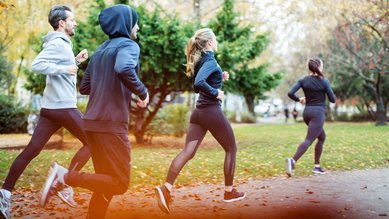
Self-help groups for adolescents and young adults sometimes discuss topics that are not addressed in other groups or topics that young people prefer to discuss with people of a similar age. Self-help groups for young people are sometimes organized along unconventional lines rather than following the usual structures. For example, they may meet in cafés or parks or take the form of a theater group. For young members of self-help groups, it is important to have fun and share experiences together. The diversity of self-help groups for young people is illustrated by the names that some groups choose for themselves – for example, the “MS Chameleons”, a self-help group for people with multiple sclerosis in Weiden, which was founded already 20 years ago. “DasDepriDing” is the name of a group of young people with depression and anxiety disorders who meet in Regensburg.
Virtual spaces and online platforms also play a role in self-help for young people. For example, ten young people work together to write a blog entitled “Lebensmutig” (meaning “Lust for Life”), which deals with a range of topics, such as depression, cancer and addiction. Specifically, they write about their experiences in self-help groups, the challenges they face and their personal views.
Their blog entries can be found here: https://www.junge-selbsthilfe-blog.de (in German).
In the “Lebensmutig” podcast, people talk about their personal experiences of self-help groups for young people.
Self-help for young people makes effective use of online networking. Facebook, Instagram, YouTube and other social media platforms offer many opportunities for finding support and creating an online presence for a group.
How does a self-help group support young people with disabilities or chronic health conditions?
Self-help groups enable people with the same disabilities, chronic conditions or addictions to support one another. Experiences are shared, problems discussed and solutions sought together. The groups and meetings provide a safe space, in which everything that is discussed is kept within the group. No-one needs to prove themselves. It’s okay to open up and be vulnerable. Having many members gives the group the strength and confidence to try out new things. The positive effects of taking part in a self-help group have been scientifically proven. For example, it can help people to manage their health condition and promote healthy behavior.
How to find a self-help group for young people
There are various ways to find a self-help group for adolescents or young adults. Different services are available in different regions. An important point of contact available across all regions is the “Junge Selbsthilfe” portal. There you will find a national list of self-help groups for young people, together with their contact details. These can be searched by zip code and topic. The portal also provides tips for setting up a new group.
The “Junge Selbsthilfe” is operated by the National Contact and Information Point for Self-Help (NAKOS).
Self-help contact and information points can also help people locate a group. These are professional advice centers. Contact details for local and regional self-help contact and information points are provided on the NAKOS website.
Young people with an addiction can search for a group on the Caritas website.
Where can I find more information?
More information about the organization and independence of self-help services and about how the interests of people with disabilities and chronic illnesses are represented at a political level is provided in our self-help topic overview.
- BAG SELBSTHILFE. Formen und Strukturen der Selbsthilfe. Aufgerufen am 13.05.2025.
- Lebensmutig. Junge Selbsthilfe Blog. Aufgerufen am 13.05.2025.
- Nationale Kontakt- und Informationsstelle für Selbsthilfe (NAKOS). Junge Menschen und Selbsthilfe. Aufgerufen am 13.05.2025.
- Deutsche Arbeitsgemeinschaft Selbsthilfegruppen e.V. (DAG SHG). Wirkungen der Teilnahme an Selbsthilfegruppen auf den Wissenserwerb chronisch Kranker und ihrer Angehörigen. Ergebnisse aus der SHILD-Studie. Selbsthilfegruppenjahrbuch 2019: 108-115.
- Schon mal an Selbsthilfegruppen gedacht? Das Portal für Junge Selbsthilfe. Aufgerufen am 13.05.2025.
- Selbsthilfe Akademie Sachsen. Facebook-Gruppen: Tipps und Tricks für Anfänger*innen. Aufgerufen am 13.05.2025.
- Selbsthilfe Kontakt- und Informationsstelle (SEKIS). Junge Selbsthilfe. Aufgerufen am 13.05.2025.
- Walther M. Bunte Selbsthilfe. Junge Menschen sind oft kreativer bei der gegenseitigen Unterstützung. 2017.