Conditions Ringworm
ICD codes: B35.4 What are ICD codes?
Ringworm typically causes characteristic ring-shaped, dry, and scaly red patches on the skin. It is triggered by an infection with filamentous fungi (dermatophytes). The infection can be effectively treated by applying anti-fungal ointment to the skin.
At a glance
- Ringworm (tinea corporis) is an inflammatory fungal infection of the skin.
- It is caused by an infection with filamentous fungi (dermatophytes).
- Dermatophytes can be transmitted through direct contact with infected humans or pets. Indirect transmission is also possible, for example via contaminated objects or clothing.
- Typical signs of ringworm include ring-shaped, dry, scaly areas of skin redness that are often slightly itchy.
- In most cases, the infection can be effectively treated with ointments containing anti-fungal agents.
Note: The information in this article cannot and should not replace a medical consultation and must not be used for self-diagnosis or treatment.
What is ringworm?
Ringworm is a moderately contagious fungal skin disease. The condition is also referred to as tinea corporis. Various dermatophytes can cause ringworm. Medical professionals call these fungi dermatophytes. Dermatophytes live on the outermost layer of the skin, where they feed on a horny substance called keratin. On hair-bearing skin, the fungus can penetrate into deeper skin layers, leading to inflammation that may also be purulent. The same fungi can also affect the foot or toenails. This is referred to as athlete’s foot and nail fungus.
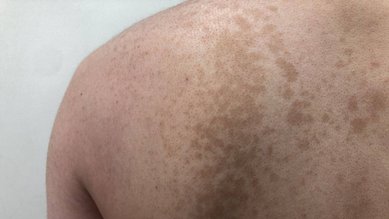
Ringworm causes characteristic circular or ring-shaped red patches on the skin, with scaling along the edges. They appear primarily on the torso, arms, and legs, as well as on the face – often accompanied by itching.
Ringworm is usually treated by applying anti-fungal (antimycotic) ointment to the skin. Severe forms of ringworm are also treated with oral tablets.
What are the symptoms of ringworm?
After contracting a dermatophyte infection, it takes approximately 2 to 4 weeks before the first skin changes become noticeable.

Ringworm is usually identified by the circular red patches it causes to develop on the skin, with paler patches toward their center. The edge of the circle is often slightly thickened and scaly. Small red spots or pimple-like bumps may also appear on the skin. In some cases, pimples and collections of pus can form.
These skin changes are typically between 1 and 5 centimeters in size and may also itch. Ringworm can affect the abdomen, back, arms, groin, legs, or face.
What causes ringworm?
You can become infected with dermatophytes through close contact with people or animals. In Germany, pets are a very common source of fungal skin infections. Besides cats, these include dogs, guinea pigs, hamsters, rabbits, dwarf rabbits, mice, and rats, for example. Fungal skin infections can also be transmitted through contact with hedgehogs (Egyptian long-eared hedgehog or European hedgehog) or calves.
It can also be picked up from unclean surfaces, gym mats, clothing, towels or bed linen. A typical and currently significant issue is “mat fungus” or “wrestler’s ringworm”, which can be transmitted in wrestling clubs as well as in barbershops with poor hygiene measures.
It is also possible to transfer dermatophytes (ringworm fungi), for example from the foot, to other parts of the body such as the groin, face, or hairy scalp (self-inoculation or autoinoculation).
Ringworm also occurs as a sexually transmitted disease. Those primarily affected are men who have sex with men (MSM).
Transmission from person to person plays a significant role, particularly with the new types of skin fungi. These include two new subspecies of the skin fungus Trichophyton mentagrophytes. These fungi are commonly found in India and Southeast Asia, among other places. Skin fungal infections caused by these new fungi must also be expected in Germany.
Dermatophytes thrive in warm, moist environments. For this reason, infections are often picked up in swimming pools or changing rooms. Dermatophytes also thrive particularly well on sweaty skin.
What factors increase the likelihood of catching ringworm?
If pre-existing conditions that weaken the immune system are present, dermatophytes can spread particularly easily.
Obesity, an unhealthy diet, heavy nicotine or alcohol consumption, or chronic conditions such as diabetes can increase the overall risk of skin infections.
Older people are also at an increased risk because their immune system no longer functions as well as that of a young person.
If people frequently visit gyms, swimming pools or communal changing rooms, their risk of infection is similarly higher. In contact sports such as wrestling or judo, it is particularly easy to catch an infection. This is then often referred to as “wrestler’s ringworm” or “mat fungus.”
How high is the risk of infection?
The overall risk of infection is only moderately high.
For example, if a child attending school is infected with ringworm, the risk of other children in the class becoming infected is less than 10 percent.
The risk of infection spreading within the family is around 10 to 30 percent.
With new types of skin fungi, the risk of infection within the family or during close physical contact outside the family is very high.
How common is ringworm?
In industrialized western countries, around 10 to 20 percent of the population will develop a ringworm infection at some point in their lives.
What is the outlook for ringworm?
Ringworm can normally be treated effectively with ointments.
In some cases, the condition worsens if the dermatophytes settle deep within the hair follicles. If this happens, small nodules appear on the skin, either on their own or around the rash patches. This can occur, for example, in people whose immune system is suppressed due to medication they are taking. Purulent fungal skin infections also occur in children, primarily caused by fungi originating from animals.
If treated with an anti-inflammatory cream containing cortisone, the typical skin rash disappears but the skin fungi continue to spread. Atypical and highly varied skin changes then develop that are difficult to classify. Creams containing cortisone should only be used alternately or in combination with an antifungal cream. Creams containing cortisone should also be applied only in cases of highly inflamed ringworm and, at most, for a few days (3–5 days).
If the skin barrier is damaged by ringworm, an additional bacterial infection can also occur. This affects areas such as skin folds or moist skin patches. If the skin is scratched due to severe itching, a bacterial infection of the wounds can also occur.
Sometimes a fungal skin infection can also cause immune skin reactions. This is frequently accompanied by blisters and itching. They can also appear on parts of the body not affected by the fungal infection. Fungi are not detectable in these skin lesions. These skin reactions occur particularly when antifungal treatment has begun. Skin changes clear up once the skin fungus has been successfully treated.
How can ringworm be prevented?
Simple hygiene measures can prevent transmission of fungi. For example:
- Keeping the skin clean and dry, wearing airy clothing
- Not sharing clothing, bed linen, towels, or other personal items with others
- Washing clothing worn close to the body at 60 °C whenever possible
- Washing hands after contact with animals
How is ringworm diagnosed?
The symptoms that ringworm causes on the skin are often so typical that doctors can identify a fungal infection at a glance. Nevertheless, similar-looking skin conditions should be ruled out, especially atopic dermatitis and psoriasis.
If the doctor wants to pinpoint which type of fungus is causing the infection, they can take a small scraping of skin from the edge of the rash. This sample can then be examined under a microscope or using a special laboratory test. Swabs obtained by vigorous rubbing are also suitable for the detection of cutaneous fungi.
If there are atypical skin reactions or a persistent rash, it may be necessary to take a biopsy, i.e. a tissue sample.
How is ringworm treated?
In most cases, the ringworm clears up if the affected areas of the skin are treated with an ointment effective against skin fungi.

When applying the ointment, it’s important to also cover the surrounding healthy skin about 2 cm beyond the rash itself. Once the skin has regained its normal appearance, treatment should be continued for another week. Otherwise, the fungal infection may recur. The skin on which the rash appears should be kept as dry as possible.
Important: Ointments containing cortisone can make a fungal skin infection worse and make diagnosis more difficult. Anti-fungals containing the active ingredient nystatin are not effective against ringworm.
If the ringworm infection is particularly severe, affects several skin regions at the same time, or has penetrated the deeper skin layers, doctors will prescribe anti-fungal tablets. If the skin becomes very scaly, keratolytic preparations can be helpful. They are applied locally.
Fungal skin infections caused by the new filamentous fungi species are very persistent and very difficult to treat. Internal treatment with antifungal medication is almost always necessary, supplemented by the use of creams and ointments effective against skin fungi. In the event of infection by Trichophyton mentagrophytes genotype VIII (Trichophyton indotineae), resistance testing must be performed. Before treatment, the effect of various antifungal agents on the specific fungus present is tested to be able to select the most effective treatment.
How does ringworm impact everyday life?
As ringworm is usually only moderately contagious and can be effectively treated, infected children can continue to attend school or pre-school.
People with ringworm who play contact sports without protective clothing should avoid training with others after beginning treatment for at least a week. For wrestlers affected by “mat fungus”, the risk of transmission exists as long as the ringworm skin lesions are present. When training can be resumed should be discussed on an individual basis with the treating physician.
- BASCÓN, L., et al. [Translated article] Outbreak of Dermatophyte Infections on the Head and Neck Related to Shave Haircuts: Description of a Multicenter Case Series. Actas dermo-sifiliograficas, 2023, 114. Jg., Nr. 5, S. T371-T376.
- DynaMed [Internet], Ipswich (MA). Tinea corporis. EBSCO Information Services. Record No. T113683. 2018 (1995). Aufgerufen am 23.11.2021.

Reviewed by the German Dermatological Society (Deutsche Dermatologische Gesellschaft e.V., DDG).
As at: