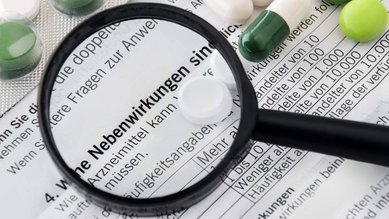
Healthcare Managing medication – storing, taking and disposing of medication correctly
For medication (drugs) to work correctly, it should be stored and taken as directed. Certain foods, alcohol or other medicines may interfere with the effect of medication and produce undesired interactions. The package insert provides important instructions.
At a glance
- For medication to be used safely and work as intended, it must be stored and taken as directed.
- Medication should be stored in its original packaging together with the package insert. It should be protected from heat, light and moisture.
- It is important to follow the instructions for the correct dosage and times to be taken.
- Undesired interactions could occur if certain foods, alcohol or other medicines are taken at the same time.
- With non-prescription medication, such as painkillers, it is particularly important to observe the information in the package insert.
- In most regions of Germany, medication that has expired or is no longer needed can, with a few exceptions, be disposed of with household waste.
Note: The information in this article cannot and should not replace a medical consultation and must not be used for self-diagnosis or treatment.


Why is it important to store, take and dispose of medication as directed?
When managing medication (medicines), there are certain points to bear in mind to ensure that they are effective and to avoid unwanted side-effects. If a medicine is taken or stored incorrectly, it may have no effect, an inadequate effect or too strong an effect on the body. In addition, taking certain medicines at the same time or together with certain foods can lead to health problems.
It is therefore important to take and store medication as specified in the package insert (patient information leaflet) or as discussed with a doctor or pharmacist. It is particularly important to read the package insert that accompanies non-prescription medication, such as certain painkillers.
In most regions of Germany, medication that has expired or is no longer needed can, with a few exceptions, be disposed of with household waste. Medication must never be thrown down the drain, as this would be harmful to the environment.
How to store medication correctly
To ensure that medication retains its effectiveness and quality, it is important to store it as specified by the manufacturer. Some medication is sensitive to heat or cold, damp or sunlight. For this reason, it is essential to follow certain instructions, e.g. in relation to storage in a refrigerator. Instructions for correct storage are found on the packaging and in the package insert.
How to store medication correctly:
- together with the package insert in the original packaging
- in a location where it is protected from heat and sunlight
- in a dry environment (not in the bathroom)
- liquid drops: in the original bottle because decanting may change the size of the drops and the dose
- ointments: seal tightly after use and keep the contents and caps clean
- protected against freezing if stored in the refrigerator
- out of reach of children due to the risk of poisoning

Important: Be cautious if the appearance, shape or smell of your medication changes. If in doubt, ask a pharmacist whether it can still be used.
When can pills be broken into smaller pieces?
Many pills are not intended to be broken into pieces, as this can impact their effectiveness. In general, soft gelatin capsules, lozenges and pills without a break line/break tab should not be broken. In addition, pills with a decorative score line should not generally be split. The dosage instructions in the package insert (patient information leaflet) will specify whether or not the pill can be broken into smaller pieces.

As well as reducing the dose, crushing a pill may also have other unwanted consequences:
- Sensitive active ingredients may begin to degrade at the points where the pill is fragmented. This reduces the effectiveness of the pill.
- If the coating on an extended-release pill is broken, the delayed effect is undone so that too much of the active ingredient is released at once (overdosage).
- If a pill’s protective covering is missing, some substances may be broken down by stomach acid before they have a chance to take effect.
- If active ingredients are released into the body too soon or in the wrong location due to pills being broken, this may be harmful to health.

Important: If you are unsure about whether it’s okay to split your pills, check with a pharmacist or doctor first.
How are pills split correctly?
Where possible, pills that can be split should not be broken using your fingers or a kitchen knife – even if they have a break line. Instead, a pill splitter should be used to accurately split them and avoid uneven halves and the associated fluctuating amounts of active ingredients. This applies in particular to the splitting of round pills. Pill splitters can be purchased in pharmacies and drugstores.
When and how to dispose of medication correctly
Once past its expiry date, medication can become less effective. In some cases, harmful degradation products may also be formed. Often, these changes cannot be detected by looking at the medication. Therefore, they should no longer be used and should be disposed of in an environmentally sound manner once their expiry date has passed. Specific instructions for disposing of medication are provided in the “Storage” section of the package insert that accompanies the relevant medicine.
The following general rules apply to the disposal of medication:
- In almost all regions of Germany, most medication can be disposed of in the general waste bin with normal household waste. When incinerated at high temperatures, no harmful active substances are released into the environment.
- To avoid environmental contamination, medication must not be disposed of down the sink or toilet. Also avoid rinsing out medicine containers.
- Specific medicines, such as drugs to treat cancer, cannot be disposed of with regular household waste. Refer to the instructions in the package insert or consult a doctor’s office or pharmacy.
- Many recycling centers and household hazardous waste collection vehicles have a collection point for medicines.
- Some pharmacies will also accept medication for disposal on a voluntary basis.
In Germany, the rules on how to correctly dispose of medication differ depending on the region. In most regions, all but a few types of medication should be disposed of with general waste. In other regions, it should be disposed of using household hazardous waste collection vehicles or recycling centers.
For more information about the disposal of medicines, see the website of the Federal Institute for Drugs and Medical Devices (Bundesinstitut für Arzneimittel und Medizinprodukte – BfArM) and arzneimittelentsorgung.de. On the arzneimittelentsorgung.de website, you can also enter your zip code to find out which disposal regulations apply to the region where you live.
Which foods can have an impact on the effects of medication?
Medication may produce a different effect on the body if it is taken together with certain foods and drinks. Some products therefore need to be avoided when taking medication.
Examples of foods that frequently cause interactions with medication:
- Grapefruit and grapefruit juice strengthen or weaken the effects of certain drugs, especially those that reduce blood pressure or cholesterol levels or influence the immune system response. Bitter oranges, pomelos and star fruit have similar effects.
- When taking birth control pills, certain antibiotics or cortisone medication, drinking coffee or black tea can cause sleeplessness and an increased urge to urinate, while also inhibiting iron absorption.
- Dairy products and other foods containing calcium can reduce the absorption of certain active ingredients in medication. This occurs, for example, with many antibiotics, thyroid hormones and methotrexate, which is used to treat rheumatic diseases and skin conditions. Calcium-rich mineral water or calcium-enriched orange juice can also weaken the effectiveness of these drugs.
- If taken with certain drugs used to reduce blood pressure, licorice can trigger heart problems or muscle weakness.

Information about further potential food-drug interactions can be obtained from various sources such as the Federal Institute for Public Health (Bundesinstitut für Öffentliche Gesundheit – BIÖG).
Why are there many medicines that cannot be taken with alcohol?
Medication should generally not be taken with alcohol. Alcohol can unpredictably strengthen the effect of many types of medication. If taken with alcohol, active ingredients may cause drowsiness, impaired coordination and mobility and breathing problems. Medication that must never be taken in conjunction with alcohol includes the following:
- drugs to treat depression (antidepressants), anxiety disorders (benzodiazepines) and other mental health conditions (antipsychotics)
- drugs to treat allergic reactions (antihistamines)
- sleeping pills and sedatives
- drugs to relax the muscles (muscle relaxants)
- drugs to treat epileptic seizures (anticonvulsants)
- certain strong painkillers (opiates)

Important: Anyone who drinks alcohol regularly shouldn’t use paracetamol as pain medication. Regular alcohol consumption and use of paracetamol is associated with a risk of liver damage.
Which medicines often produce unwanted interactions?
If several medications are taken at the same time, their effect can be strengthened, weakened or even eliminated. Side effects may also occur. This risk increases with the number of different medicines a person is taking. It is therefore helpful for patients to make a list of all the medication they regularly take and to take this list with them to doctor’s appointments or when going to a pharmacy. The list should also include over-the-counter medication and dietary supplements.
Alternatively, patients can have a medication treatment plan created for them. They are entitled to such a plan if they have to regularly take 3 or more prescribed drugs. A list or medication treatment plan make it easier to clarify any potential interactions.
Drugs that frequently produce interactions include the following:
- drugs to reduce blood sugar levels (oral antidiabetics)
- blood-thinning medication (anticoagulants)
- drugs to treat arrhythmias, i.e., irregular heartbeat (antiarrhythmics)
- heart failure medication
- medication to treat depression (antidepressants)
- birth control medication such as the birth control pill (oral contraceptives)
- drugs to treat bacterial and viral infections (antibiotics and virostatics)
Important: Information about possible drug interactions is provided on the package insert that comes with the medication.
What to remember when taking over‑the‑counter painkillers
Many painkillers can be purchased in pharmacies without a prescription. However, this type of medication can also have side-effects. These include gastric ulcers, bleeding in the gastro-intestinal tract, and problems with the heart or lungs. Painkillers can also produce interactions with other medication.
To reduce the risk of side-effects and drug interactions when taking painkillers, you should remember the following key points:
- Only take as much as needed and as little as possible.
- Don’t exceed the maximum dosage specified in the package insert.
- Only take painkillers for as long as you need them and not for an extended period. If symptoms persist over several days, you should consult a doctor.
- Check for potential interactions with other types of medication. This information will be provided in the package insert.
- There are certain painkillers that cannot be taken or can only be taken in small doses by children, those who are pregnant and people with certain pre-existing conditions such as stomach ulcers, heart failure, asthma, and kidney or liver problems.
- If you have any questions or are unsure about anything, consult with a doctor or pharmacist.
What to remember when taking antibiotics
Antibiotics are used to treat infections caused by bacteria. If they are used too frequently or taken incorrectly, the bacteria can become insensitive to antibiotics and develop resistance. As a result, some infectious diseases can no longer be treated as effectively with antibiotics.
To ensure that antibiotics can be relied upon to work effectively and continue to be effective in the future, it is important to observe the following advice when using them:
- Only take the medication with water. Juices, dairy products and alcohol can affect absorption of the antibiotic.
- Food supplements containing minerals can inhibit the effect of an antibiotic and should not be taken at the same time.
- Only take the antibiotic at the times and intervals prescribed, e.g. every 8 hours.
- Be aware of possible interactions with medications such as blood thinners, heartburn treatments or the contraceptive pill.
- Never take antibiotics prescribed for another person and never pass yours on to anyone else.
- Continue the treatment until the course is finished, even if you are already feeling better.
- If you do ever have a few tablets left over, you should never store them for use at a later date. Dispose of the antibiotics as per the rules for the relevant region of Germany, i.e. with your household waste or at a special collection point. Never tip them down the drain or flush them down the toilet. Bacteria that enter the environment from sewage can develop new resistance there.
What to be aware of during pregnancy and breastfeeding
There are many medicines that cannot be taken at all or can only be taken in small doses during pregnancy or when breastfeeding a baby. For information about taking medication during pregnancy, see the article “What’s allowed and what’s not during pregnancy?”.
Information about whether certain medications can be taken while pregnant or breastfeeding is provided on the website embryotox.de.
- Bundesinstitut für Arzneimittel und Medizinprodukte (BfArM). Arzneimittelentsorgung: Hinweise zur richtigen Entsorgung von nicht-verbrauchten Arzneimitteln. Aufgerufen am 08.01.2026.
- Bundesministerium für Gesundheit (BMG). Arzneimittel richtig aufbewahren und entsorgen. Aufgerufen am 08.01.2026.
- Bundesinstitut für Öffentliche Gesundheit (BIÖG). Wechselwirkungen von Medikamenten. Aufgerufen am 08.01.2026.
- Gelbe Liste. Arzneimittel-Interaktionen mit Nahrungsmitteln. Aufgerufen am 08.01.2026.
- Gesellschaft für Chemische Technik und Biotechnologie e.V. (DECHEMA). Arzneimittel-Entsorgung richtig gemacht. Aufgerufen am 08.01.2026.
- Institut für Qualität und Wirtschaftlichkeit im Gesundheitswesen (IQWiG). Antibiotika richtig anwenden und Resistenzen vermeiden. Aufgerufen am 08.01.2026.
- Institut für Qualität und Wirtschaftlichkeit im Gesundheitswesen (IQWiG). Medikamente für Kinder richtig dosieren. Aufgerufen am 08.01.2026.
- Institut für Qualität und Wirtschaftlichkeit im Gesundheitswesen (IQWiG). Rezeptfreie Schmerzmittel sicher anwenden. Aufgerufen am 08.01.2026.
- Pharmazeutische Zeitung online. Tablettenteilen. Aus eins mach zwei. Aufgerufen am 08.01.2026.

In cooperation with the Federal Institute for Drugs and Medical Devices (Bundesinstitut für Arzneimittel und Medizinprodukte, BfArM).
As at: