Digital health The electronic medication treatment plan (eMP)
With the electronic medical treatment plan, the most important information about your medication can be stored electronically and in one place. This provides doctors, dentists, hospitals, therapists and pharmacists with a constant overview of all the medication.
At a glance
- People with statutory health insurance are entitled to a medication treatment plan in paper format that contains information about their medication and the dosages of this.
- If desired, this can be stored as an electronic medication treatment plan (eMP) in their electronic patient record (ePA).
- The eMP simplifies cooperation between doctors, dentists, therapists and pharmacists.
- It furthermore helps to avoid interactions between different medications.
- The eMP is undergoing continual further development and is likely to offer additional functions in the ePA in the future.

What is a medication treatment plan?
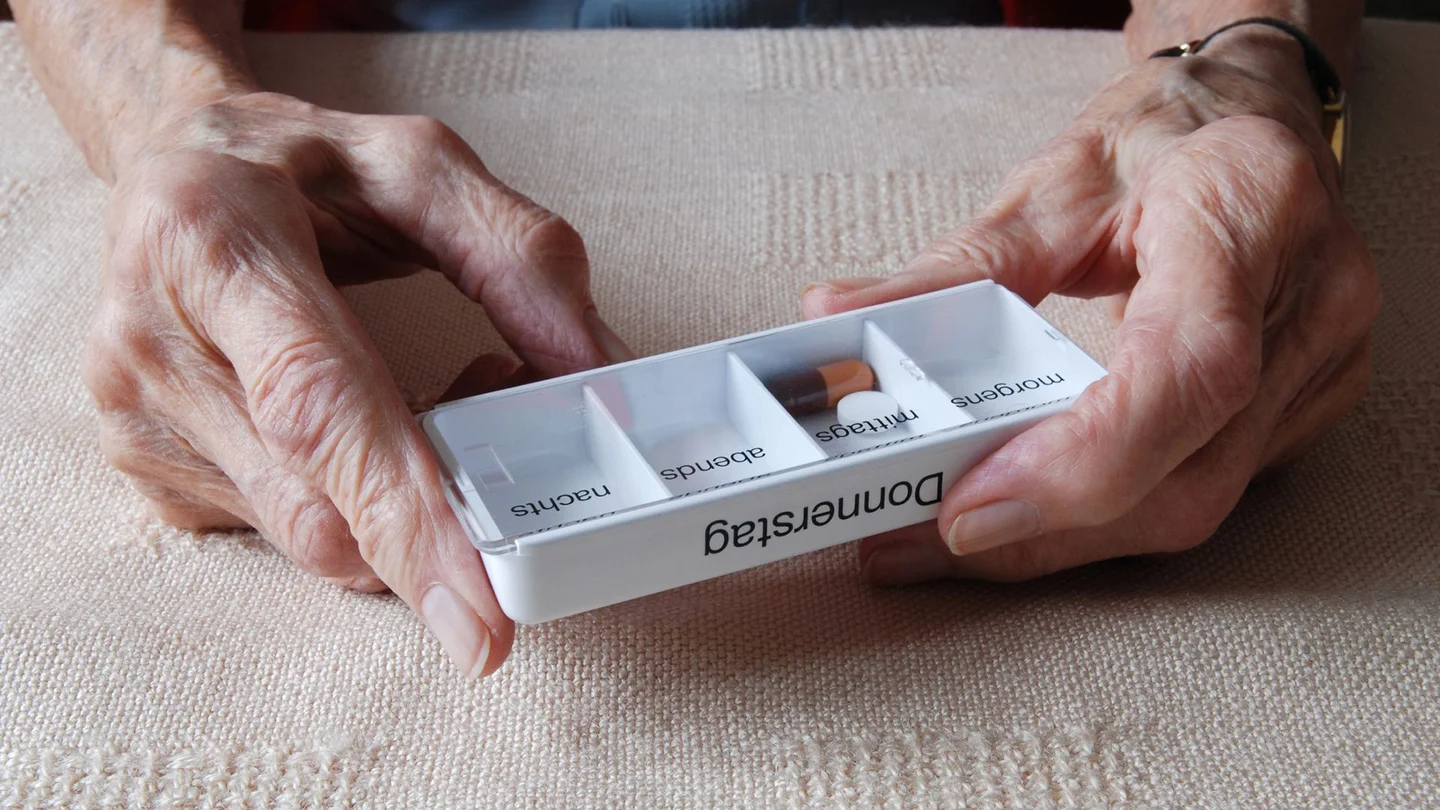
It can be difficult for patients who take several drugs on a regular basis to keep track of these. The nationally standardized medication treatment plan (BMP), introduced in 2016, provides support for those taking medication. This paper document contains precise details of all medications and their active ingredients as well as how they are to be taken.
Doctors are required to create a nationally standardized medication treatment plan for patients covered by statutory health insurance if:
- at least 3 drugs have been prescribed that have a systemic effect, i.e., an effect on the body as a whole and
- it is expected that these drugs will be taken for a period of at least 28 days

In particular, if various doctors prescribe medication for a patient, it is important for all to know what has already been prescribed and in which dosage. This is the only way to avoid potential interactions between drugs.
However, people don’t always carry the paper document with them and it can be misplaced. On request, it is therefore possible to have the medication treatment plan stored in the electronic patient record (ePA). This is then known as an electronic medication treatment plan (eMP). In this way, all details of prescriptions can be reliably checked in a medical practice, by a therapist, in hospitals and in pharmacies. The medication treatment plan can still be printed out as usual.
Important: The electronic medication treatment plan (eMP) should not be confused with the electronic medication list (eML), which also forms part of the ePA. The medication list details all medication prescribed by e-prescription and issued by a pharmacy after the ePA has been created. The eMP can therefore also include additional medication or information.
How does the electronic medication treatment plan differ from the nationally standardized medication plan?
Both the nationally standardized medication treatment plan in paper format and the electronic medication treatment plan contain the following information:
- personal profile data, such as name and date of birth
- the medication (both prescription and over-the-counter drugs, including their active substances)
- information on how the medication is to be used (dosage, type, frequency and times to be taken)
Medication and dietary supplements that patients have purchased over the counter should also be included in the medication treatment plan. This is the only way to fully detect potential interactions between different types of medication. Further information can also be added in free text format, for example about allergies, intolerances or kidney function.
In future, the electronic medication treatment plan (eMP) in the electronic patient record (ePA) is also set to contain additional information that is of use with regard to treatment:
- comments area, in which doctors, therapists and pharmacists can enter notes about the medication and can exchange specialized information with one another
- Once details of medications are stored, they remain in the data record even after they are no longer prescribed for the patient. This enables future tracing of which medication was taken and when.

What are the benefits of an electronic medication treatment plan?
The electronic medication treatment plan makes it safer for people to take medication. The plan ensures that doctors, dentists and pharmacists can see, at a glance, all medication that the patient is currently taking – allowing them to determine whether interactions or allergic reactions are likely to occur.
The electronic medication treatment plan is useful, for example, if:
- the patient purchases over-the-counter medication for themselves
- new drugs need to be prescribed
- a repeat prescription is required
- side effects occur
- the trade names of drugs change
How is the electronic medication treatment plan used?
The electronic medication treatment plan was originally an application that formed part of the electronic medical data card (eGK). Alongside emergency information, it can also be used to store a personal medication treatment plan. This medication treatment plan can now also be transferred to the electronic patient record (ePA). Use of the electronic medication treatment plan is voluntary.
The electronic medication treatment plan can be created in a medical practice, dental practice or pharmacy, provided that the patient consents to this being done. Your health card and a PIN that you receive from your health insurance company are required to create the plan.
The electronic medication treatment plan is then created in the management system used by the medical or dental practice or pharmacy and is transferred to the medical data card. If desired, this medication treatment plan can also be stored in the electronic patient record (ePA). You can also receive a paper copy of it. A copy of the data remains in the management system.
It is useful to specify that you have an electronic medication treatment plan at each subsequent visit to the doctor/dentist/pharmacy so that your plan can be updated whenever your prescription changes.
Only people in certain professions are authorized to read your electronic medication treatment plan: doctors, psychotherapists, pharmacists and their employees. You need to give your consent each time before they do so.
Interesting fact: You consent to the use of the electronic medication treatment plan by entering your medical data card PIN. This PIN can also be disabled so that verbal consent is sufficient for future use.
- Gematik GmbH. Elektronischer Medikationsplan. Aufgerufen am 08.05.2025.
- Gematik GmbH. E-Rezept. Aufgerufen am 08.05.2025.
- Kassenärztliche Bundesvereinigung (KBV). Medikationsplan. Aufgerufen am 08.05.2025.
- Kassenärztliche Bundesvereinigung (KBV). Die Medikationsliste: Welche Daten zur Medikation in die ePA kommen. Aufgerufen am 10.09.2025.

Reviewed by the German National Agency for Digital Medicine (gematik).
As at: