Healthy living Occupational diseases – hazards in the workplace
Certain workplace hazards, such as exposures to harmful substances or noise or the handling of heavy loads, can have a negative impact on health. If these cause an illness that is included on the list of officially recognized occupational diseases, the illness can be verified as an “occupational disease”. The person affected is then entitled to claim statutory accident insurance benefits.
At a glance
- Occupational diseases are illnesses that are listed on the official list of recognized occupational diseases and that occur as a result of a work-related activity.
- In order for a condition to be verified as an occupational disease, it must be proven that the condition was in fact caused by exposure to a hazard in the workplace.
- The statutory accident insurance fund determines whether a health condition can be verified as an occupational disease.
- If an occupational disease has been verified as such, the person affected may be entitled to claim statutory accident insurance benefits.
- An objection may be lodged against a decision denying the application.


What is an occupational disease?
Occupational diseases are health conditions that are listed on the official list of recognized occupational diseases and that occur as a result of exposure to hazards in the workplace. In order for an illness to be included on the list of approved occupational diseases, certain prerequisites must be fulfilled. It must be medically confirmed that the health condition is, in principle, caused by exposure to a certain health hazard. In addition, the person making the claim must be exposed to this hazard in the workplace to a greater extent than the rest of the population. For example, non-melanoma skin cancer can only be verified as an occupational disease if the person making the claim spends more time in the sun at work than other workers.
Health hazards in the workplace include:
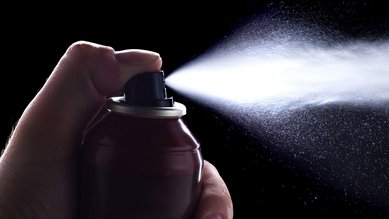
- Chemicals: Hair dyes or bleaching agents, for example, can cause skin conditions in hair stylists.
- Pressure and vibration: Exposure over many years to vibrations while in a seated position – as experienced, for example, by construction machinery operators sitting on seats without shock absorbers – may cause damage to the spinal discs.
- Carrying heavy loads: Spinal disk damage may similarly be suffered by people who are required to repeatedly carry heavy loads over many years while working on building sites.
- Dust: In the mining or metal industries, certain types of dust can cause diseases of the lungs.
- Pathogens: Pathogens, i.e. disease-causing microbes, can cause infectious diseases. This may affect healthcare staff, for example.
- Noise: Hearing damage can be caused by exposure to noise in workshops or on plant floors.

How can occupational diseases be prevented?
To protect the health of employees, general occupational health and safety measures must be implemented in every workplace. This is the responsibility of the employer in each case. Occupational health and safety measures are designed to prevent injuries, accidents and occupational diseases.
The German Occupational Safety and Health Act defines the extent of employer obligations in this regard. For example, employers must assess potential health hazards in the workplace on a regular basis and implement suitable preventive measures. Special precautions are required for particularly high-risk areas of work.
Possible health and safety precautions include:
- noise and hearing protection
- hygiene measures
- vaccination against infectious diseases
- ergonomic design of workstations
- occupational health check-ups
Further measures can be taken if a particularly high risk of an occupational disease developing, worsening or recurring is suspected. Such measures go above and beyond general occupational health and safety precautions. The employer and accident insurance provider have joint responsibility for these measures.
Which conditions are recognized as occupational diseases?
The German Ordinance on Occupational Diseases (BKV) defines which health conditions are recognized as occupational diseases in Germany. 85 occupational diseases are currently recognized (as at July 2025).
You can view the list of recognized occupational diseases on the website of the Federal Institute for Occupational Safety and Health (Bundesanstalt für Arbeitsschutz und Arbeitsmedizin, BAuA).
Skin conditions and noise-induced hearing loss are among the most common occupational diseases.

Inflammatory skin conditions affecting the hands may, for example, occur due to the hands being frequently damp. Chemicals in disinfectants and building materials can also trigger skin conditions. Inflammatory skin conditions can affect hair stylists, healthcare staff and construction workers, among others.
Noise-induced hearing loss can occur if noise levels in the workplace exceed certain limits. Noise at a moderate volume that occurs regularly over a prolonged period can cause long-term damage to hearing. However, damage can also be caused by very loud noises that only occur briefly throughout the working day. The inability to hear high-pitched sounds as clearly as you once did is an early sign of noise-induced hearing loss.
Who to contact if I think I may have an occupational disease
If you suspect that you have an occupational disease, you can report this to the relevant accident insurance provider. Doctors are also obliged to report suspected cases of occupational diseases.
The report can be submitted in writing or online via the service portal of the German accident insurance funds and employers’ liability insurance associations.
The relevant accident insurance provider depends on the sector in which the person is employed. The statutory providers are:
- employers’ liability insurance associations (“Berufsgenossenschaften”)
- agricultural employers’ liability insurance associations (“landwirtschaftliche Berufsgenossenschaften”)
- public accident insurance providers
How can I find the relevant accident insurance provider?
Employers can ask their employers for details of the relevant accident insurance provider. In case of uncertainty as to which accident insurance provider is responsible, assistance is available from the social accident insurance telephone information line.
This helpline is available free of charge from 8:00 am to 6:00 pm, Monday to Friday, on 0800 6050404.
Important: The relevant accident insurance provider investigates and determines whether a health condition can be verified as an occupational disease.
What process should be followed if an occupational disease is suspected?
In order for a health condition to be verified as an occupational disease, a connection must be established between the condition and a health hazard in the workplace. The accident insurance provider begins by establishing a clear picture of hazards in the workplace. This may involve conducting surveys, interviews and investigations in the workplace. Colleagues, company doctors and other stakeholders may also provide information. The findings that are gathered provide a basis for deciding whether the health condition is an occupational disease. Accurate details of working conditions are therefore important.
If health hazards are identified in the workplace, it must then be established whether these have caused the health condition to develop. The employee's medical history is another important consideration in this regard. To assess the medical context, the accident insurance provider proposes at least 3 people to provide a medical report. The employee can then select an expert for the assessment. It is also possible for employees themselves to propose a qualified person for the assessment. Specialists in the area of occupational medicine can act as experts for the assessment, for example. Medical experts specializing in the area relevant to the specific health condition may also be commissioned to prepare a report.
Once all the results have been collected, the accident insurance provider decides whether to verify that the illness is indeed an occupational disease. The decision is communicated in writing.
Important: Once the decision has been delivered, you can submit an objection against this decision to the accident insurance provider within a period of one month.
What benefits am I entitled to if I have an occupational disease?
In principle, everyone is entitled to treatment when they become ill – this is usually paid for by health insurance funds. In the case of a verified occupational disease, however, the relevant accident insurance provider covers the costs of essential medical treatment as well as the costs of any therapeutic and medical aids required. In addition, the person may be entitled to further extensive benefits.
These benefits include:
- Medical rehabilitation benefits
- Benefits to enable participation in working life
- Social participation benefits
- Benefits that apply if the person is in need of care
- Cash benefits
The benefits also cover the costs of measures for re-integration into working life. These benefits include counseling and training measures. Accident insurance may also pay for retraining.
Accident insurance provider must also ensure that measures are taken to counteract any existing workplace health hazards. This may involve adapting the workplace for example. In addition, protective devices may be installed or protective equipment provided. If the hazard cannot be eliminated, the accident insurance provider takes steps to ensure that the person affected no longer carries out tasks that expose them to the hazard. If this results in a financial disadvantage to the employee, such as a loss of earnings, the accident insurance provider may pay a transitional benefit (“Übergangsleistung”) for a limited period of time. This may take the form of a one-off payment or a monthly recurring benefit.
Anyone who is in need of care as a result of an occupational disease will receive the necessary care benefits from the accident insurance provider. If the occupational disease causes permanent damage to a person’s health, the accident insurance provider may also provide support in the form of pension payments. If the occupational disease results in death, the family of the deceased will receive a surviving dependents’ benefit (“Hinterbliebenenrente”).
For more information about statutory accident insurance benefits that can be claimed by individuals with an occupational disease, visit the website of the Federal Ministry for Labor and Social Affairs (Bundesministerium für Arbeit und Soziales).
If the illness is not verified as an occupational disease, the costs of necessary medical treatment are covered by the relevant health insurance fund. The accident insurance provider informs the health insurance fund if the claim has been rejected. Benefits to support participation in working life may be provided by the Federal Employment Agency or statutory pension funds. The person may also be able to claim pension payments from statutory pension funds.
Where can I find contact points and more information about occupational diseases?
You can consult your company doctor if you suspect that you may have an occupational disease. The company doctor can make an initial assessment of your symptoms. Your family doctor or specialist who is providing you with treatment are other possible first ports of call. In the case of skin conditions, you can consult a dermatologist.
The DGUV, the umbrella association of German statutory accident insurance provider, has published a leaflet with questions and answers concerning the topic of occupational diseases (in German).
For more information and contact details, you can also refer to the website of the German accident insurance funds and Employers’ Liability Insurance Associations.
The website of the umbrella association “German Social Accident Insurance” (DGUV) provides contact details for the Employers’ Liability Insurance Associations, the statutory accident insurance funds, and the Social Insurance Fund for Agriculture, Forestry and Horticulture (SVLFG).
- Ärzteblatt. Hauterkrankungen am Arbeitsplatz: Frühzeitig alle Register ziehen. Aufgerufen am 17.12.24.
- Berufsgenossenschaft der Bauwirtschaft. Berufskrankheiten. Aufgerufen am 17.12.24.
- Berufsgenossenschaft Energie, Textil, Elektro, Medienerzeugnisse. Was tun bei Verdacht auf eine Berufskrankheit? Aufgerufen am 17.12.24.
- BG RCI.magazin. Lärmschwerhörigkeit Die schleichende Gefahr. Aufgerufen am 17.12.24.
- Bundesanstalt für Arbeitsschutz und Arbeitsmedizin. Merkblatt zur Berufskrankheit Nr. 2109 "Bandscheibenbedingte Erkrankungen der Halswirbelsäule durch langjähriges Tragen schwerer Lasten auf der Schulter". Aufgerufen am 17.12.24.
- Bundesministerium für Arbeit und Soziales. Was leistet die Unfallversicherung? Wer zahlt die Beiträge? Aufgerufen am 17.12.24.
- Bundesministerium für Arbeit und Soziales. Berufskrankheiten-Verordnung. Aufgerufen am 17.12.24.
- Bundesministerium für Arbeit und Soziales. Berufskrankheiten-Liste, Merkblätter und wissenschaftliche Begründungen. Aufgerufen am 17.12.24.
- Bundesministerium für Arbeit und Soziales. Was sind Berufskrankheiten? Aufgerufen am 17.12.24.
- Bundesministerium für Arbeit und Soziales. Ärztlicher Sachverständigenbeirat Berufskrankheiten. Aufgerufen am 17.12.24.
- Barmer. Berufskrankheiten: Anerkennung und Vorbeugung. Aufgerufen am 17.12.24.
- Deutsche Gesetzliche Unfallversicherung. Empfehlungen der Unfallversicherungsträger zur Begutachtung bei Berufskrankheiten. Aufgerufen am 17.12.24.
- Deutsche Gesetzliche Unfallversicherung. Berufskrankheiten-Liste. Aufgerufen am 17.12.24.
- Deutsche Gesetzliche Unfallversicherung. Berufskrankheiten. Aufgerufen am 17.12.24.
- Deutsche Gesetzliche Unfallversicherung. Silikose. Aufgerufen am 17.12.24.
- Deutsche Gesetzliche Unfallversicherung. Ganzkörper- und Hand-Arm-Vibrationen. Aufgerufen am 17.12.24.
- Einfach teilhaben. Übergangsleistungen. Aufgerufen am 17.12.24.
- Via medici Thieme. Infektionsbedingte Berufskrankheiten. Aufgerufen am 17.12.24.
- Weka. Arbeitsschutz & Gefahrstoffe. Aufgerufen am 17.12.24.