Conditions Osteoarthritis
Osteoarthritis (also known as arthrosis) is a wear and tear of the joints that is often related to aging. Joint stiffness and joint pain are typical symptoms. This article provides an overview of the symptoms, progression, and treatment of osteoarthritis.
At a glance
- In early-stage osteoarthritis, the joints are usually only painful when bearing weight.
- As the disease worsens over time, the pain increases and begins to restrict daily life.
- Anyone can get osteoarthritis.
- Many people suffer from this condition as part of the aging process.
- The typical symptoms are joint stiffness and pain.
- It is important to maintain and active lifestyle with lots of movement despite osteoarthritis.
Note: The information in this article cannot and should not replace a medical consultation and must not be used for self-diagnosis or treatment.
What is osteoarthritis?
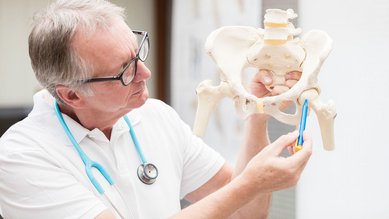
Osteoarthritis is a disease in which the cartilage between two bones becomes thinner and rougher. Over time, the joints become stiff and begin to be painful, which restricts mobility.
Osteoarthritis can develop in almost any joint – however, the most common joints are:
- osteoarthritis of the knee (gonarthrosis)
- hip osteoarthritis (coxarthrosis)
- finger osteoarthritis
- vertebral joint osteoarthritis (facet osteoarthritis)
Previously, osteoarthritis was thought to be a simple wear-and-tear disease. That’s not true – but it leads many people to the mistaken belief that nothing can be done about the joint changes. While osteoarthritis is not curable, there are many ways to strengthen the joint and relieve symptoms.
What are the signs of osteoarthritis?
Some people don’t even notice that they have osteoarthritis. Others have mild symptoms, while others have very severe symptoms. The condition typically begins after the age of 40.
The first sign of osteoarthritis is pain when pressure is placed on the joints. Impact stress, for example, during jogging, often triggers stabbing pains in the knees and hips. If pain also occurs when at rest, this indicates that the osteoarthritis is already at a very advanced stage.
In the advanced stages, the joints are also stiff after longer periods of rest. In the morning, after a long time spent lying down, it is common to experience “start-up pain”, which quickly improves with movement. If mobility fails to improve after 30 minutes, the cause is more likely to be a rheumatic joint inflammation, i.e., rheumatoid arthritis.
Swollen joints in osteoarthritis usually feel firm and are not unusually warm to the touch, unlike with rheumatism, for example. The joint line may be tender to the touch. In certain forms of osteoarthritis, particularly in the hand, clearly visible nodes (known as Heberden’s nodes) can also develop.
Mobility and the ability to bear weight can also be limited in osteoarthritis.
Some people with osteoarthritis also experience flare-ups, where the pain suddenly increases and is more likely to be stabbing, throbbing, or burning. The joint may temporarily swell and become stiffer. A flare-up usually subsides after a few days. Flare-ups often come unexpectedly, which adds to the stress.
Video What causes osteoarthritis?
The video below explains how osteoarthritis develops and what causes it.
This and other videos can also be found on YouTube
Watch nowThe privacy policy indicated there applies.
What are the causes of osteoarthritis?
Complex metabolic processes underlie the joint damage in osteoarthritis – in the joint, processes of building up and breaking down tissue are constantly taking place. Osteoarthritis develops when the breaking down processes predominate – for example, too many inflammatory substances and enzymes being released that attack the joint, and too few that contribute to its repair.
Osteoarthritis can lead to various changes in the joint.
- The resilient cartilage layer at the ends of the bones can become thinner and develop cracks. At very advanced stages of osteoarthritis, the bone can be completely bare of cartilage in some areas of the joint.
- The space between the bones, called the joint space, can become smaller.
- The synovial membrane, which produces the joint fluid, can thicken.
- The bone beneath the joint cartilage can form bone marrow edema and bone spurs (osteophytes).
- This can affect the soft tissue of the joint. This includes the ligaments, the joint capsule and, in the knee, the menisci. In addition, the muscles in the area of the joint can become weaker.
As with rheumatism, inflammation also plays an important role in osteoarthritis. The difference is that, in the case of osteoarthritis, while inflammation does contribute to the development of the disease, it is not the cause, unlike with rheumatism.
What are the risk factors for osteoarthritis?
There are various factors that can increase the risk of developing osteoarthritis or that can trigger it. These include:
- Joint injuries: A common trigger for osteoarthritis in the knee are injuries such as a torn anterior cruciate ligament or meniscus, or a bone fracture in the joint area. This kind of injury triggers a sudden release of inflammatory substances. In the long term, it can alter the mechanics of the joint. If osteoarthritis develops as a result of injuries, experts refer to this as post-traumatic osteoarthritis.
- Obesity: Severe overweight puts strain on weight-bearing joints like the knees and hips. In addition, excess body fat releases chemical messengers that promote inflammation in the joint, contributing to joint damage. Therefore, people with obesity not only more frequently develop osteoarthritis in weight-bearing joints but also in the finger joints.
- Anatomical factors: For example, knock-knees or bowlegs, or narrowing between the femoral head and the acetabulum (hip impingement) can put uneven stress on a joint.
- Heavy physical work: Jobs that involve a lot of kneeling or heavy lifting, or those with high joint impact, as when working with a jackhammer, can overload the joints over time.

How common is osteoarthritis?
Osteoarthritis is one of the most common joint conditions. In a large German study, 2 percent of adults reported having had surgery for osteoarthritis of the hip in the last 12 months, 4 percent for osteoarthritis of the knee, and 2 percent for osteoarthritis of the fingers.
Osteoarthritis usually develops after the age of 40. The likelihood of developing osteoarthritis then steadily increases until the end of life.
How does osteoarthritis progress?
The course of osteoarthritis cannot be predicted – this depends, among other things, on its triggers, the existing risk factors, and the age at which it began.
Sometimes, people with osteoarthritis remain symptom-free for a long time. Osteoarthritis often progresses slowly, causing more symptoms at times and fewer at others, which many of those affected manage well for years. Sometimes, however, symptoms can worsen quickly. And sometimes they stop increasing after a certain point or even subside.
How is osteoarthritis diagnosed?
In most cases, doctors can diagnose osteoarthritis from the typical symptoms. One typical change that can be detected is a narrow joint gap that is clearly discernible on an x-ray.
For less typical symptoms, blood tests or an MRI may also be performed to rule out other conditions, such as rheumatoid arthritis.
However, the diagnostic value of imaging examinations is limited: some people show severe changes to the joint, but have hardly any symptoms – with others, the joint looks healthy despite severe discomfort. In any case, the treatment should be based on the symptoms and the individual situation, not on what can be seen in the X-ray images.
How is osteoarthritis treated?

The most important therapeutic measure for osteoarthritis is to remain active. Inactivity leads to reduced muscle strength, and may accelerate cartilage degeneration. While a cure for osteoarthritis has not yet been found, an active lifestyle will keep the body mobile and flexible.
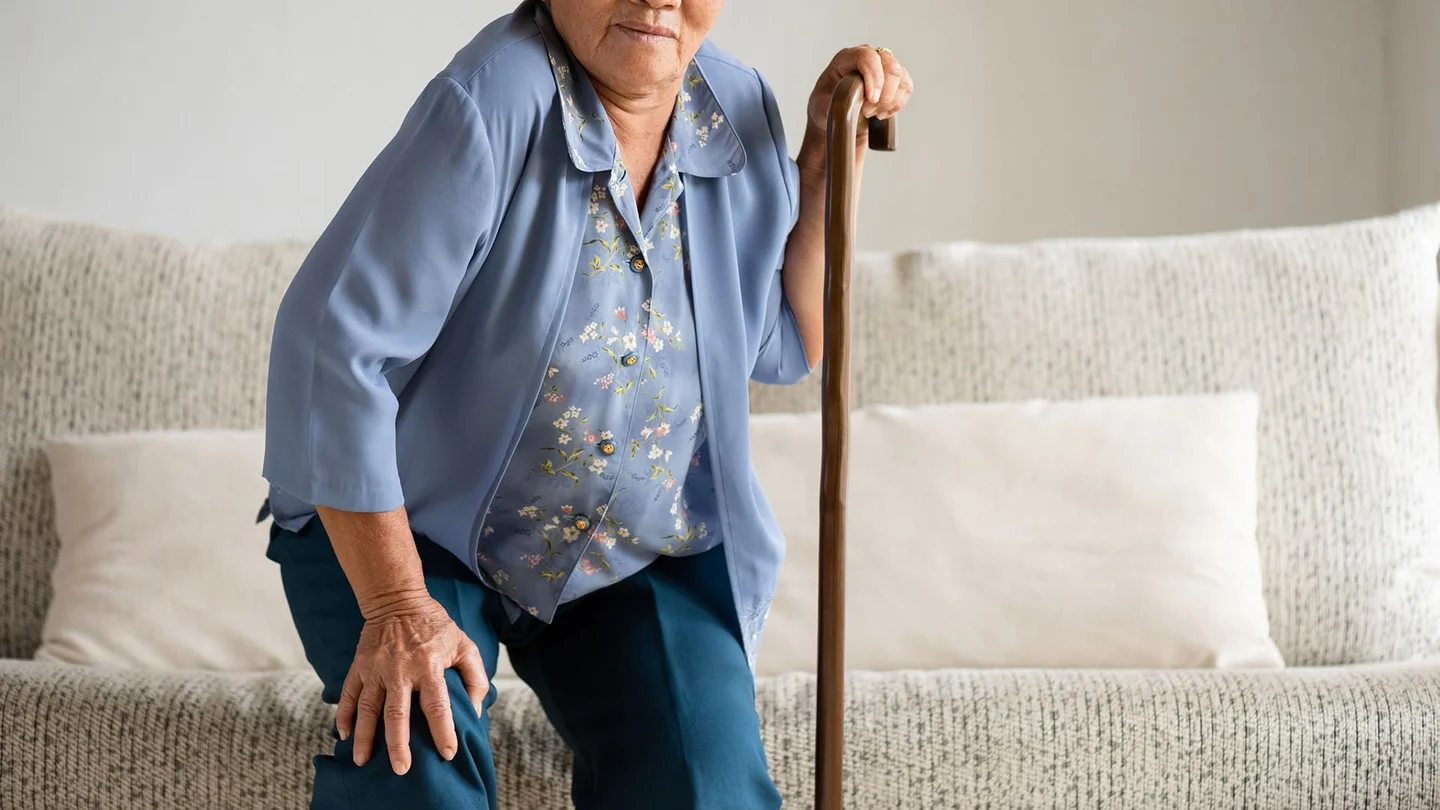
Severely overweight individuals with osteoarthritis in their knee or hip are advised to lose weight. In cases of osteoarthritis of the fingers or wrists, occupational therapy can teach individuals how to avoid strenuous movements. Aids that provide relief for painful joints are also available, such as special pens or tools for gripping and opening glasses and bottles. Walking sticks can provide support for people with knee and hip osteoarthritis. It is also advisable to try well-fitting shoes with a thicker and firmer sole that supports the arch of the foot.
Medication such as ibuprofen can provide effective relief from pain associated with osteoarthritis. To reduce the risk of side effects, it is best to only use them as needed and at the lowest effective dose. Pain relief gels for application to the joint are sometimes an alternative with few side effects.
Cortisone injections can relieve symptoms for a few weeks. However, repeated injections can weaken the joint cartilage.
Once the disease has progressed to a certain point, it may be useful to replace the worn joint surface partially or fully with an artificial joint, known as an endoprosthesis.
Important: The effectiveness of many of the treatments offered for osteoarthritis has not yet been proven. These include arthroscopy, herbal medicines, dietary supplements, injections with hyaluronic acid, ultrasound therapies, and transcutaneous electrical nerve stimulation (TENS). There is also insufficient research on the effects of certain diets on osteoarthritis.
More detailed information about osteoarthritis treatment options can be found at gesundheitsinformation.de.
- Bastick AN, Verkleij SP, Damen J et al. Defining hip pain trajectories in early symptomatic hip osteoarthritis - 5 year results from a nationwide prospective cohort study (CHECK). Osteoarthritis Cartilage 2016; 24(5): 768-775.
- Bastick AN, Wesseling J, Damen J et al. Defining knee pain trajectories in early symptomatic knee osteoarthritis in primary care: 5-year results from a nationwide prospective cohort study (CHECK). Br J Gen Pract 2016; 66(642): e32-39.
- Da Costa BR, Pereira TV, Saadat P et al. Effectiveness and safety of non-steroidal anti-inflammatory drugs and opioid treatment for knee and hip osteoarthritis: network meta-analysis. BMJ 2021; 375: n2321.
- Holden MA, Hattle M, Runhaar J et al. Moderators of the effect of therapeutic exercise for knee and hip osteoarthritis: a systematic review and individual participant data meta-analysis. Lancet Rheumatol 2023; 5(7): e386-e400.
- Hunter DJ, Bierma-Zeinstra S. Osteoarthritis. Lancet 2019; 393(10182): 1745-1759.
- Katz JN, Arant KR, Loeser RF. Diagnosis and Treatment of Hip and Knee Osteoarthritis: A Review. JAMA 2021; 325(6): 568-578.
- Lawford BJ, Hall M, Hinman RS et al. Exercise for osteoarthritis of the knee. Cochrane Database Syst Rev 2024; (12): CD004376.
- Pereira TV, Saadat P, Bobos P et al. Effectiveness and safety of intra-articular interventions for knee and hip osteoarthritis based on large randomized trials: A systematic review and network meta-analysis. Osteoarthritis Cartilage 2025; 33(2): 207-217.
- Schmidt CO, Günther KP, Goronzy J et al. Häufigkeiten muskuloskelettaler Symptome und Erkrankungen in der bevölkerungsbezogenen NAKO Gesundheitsstudie [Frequencies of musculoskeletal symptoms and disorders in the population-based German National Cohort (GNC)]. Bundesgesundheitsblatt Gesundheitsforschung Gesundheitsschutz 2020; 63(4): 415-425.
- Shahid A, Thirumaran AJ, Christensen R et al. Comparison of weight loss interventions in overweight and obese adults with knee osteoarthritis: A systematic review and network meta-analysis of randomized trials. Osteoarthritis Cartilage 2024; S1063-4584(24): 01367.
- Thomas MJ, Guillemin F, Neogi T. Osteoarthritis Flares. Clin Geriatr Med 2022; 38(2): 239-257.
- Van Berkel AC, Schiphof D, Waarsing JH et al. 10-Year natural course of early hip osteoarthritis in middle-aged persons with hip pain: a CHECK study. Ann Rheum Dis 2021; 80(4): 487-493.
- Whittaker JL, Losciale JM, Juhl CB et al. Risk factors for knee osteoarthritis after traumatic knee injury: a systematic review and meta-analysis of randomised controlled trials and cohort studies for the OPTIKNEE Consensus. Br J Sports Med 2022; 56(24): 1406-1421.