Healthy living Food hygiene – don’t give germs a chance
Some microorganisms on and in food can make people sick. Most of these cause gastrointestinal illnesses, i.e. illnesses of the stomach and intestines. However, people can avoid infection by following a few basic hygiene rules when purchasing, storing and preparing food.
At a glance
- Food can contain both friendly and harmful microorganisms.
- Harmful microorganisms can cause infection and food poisoning, which usually trigger gastrointestinal symptoms in the stomach and gut, such as diarrhea with vomiting.
- Animal produce in particular, such as meat and eggs, may be contaminated with germs.
- However, pathogens may also be present in plant-based foods, such as salads.
- If a small number of hygiene rules are observed when transporting, storing and preparing food and in controlling its temperature, this greatly reduces the risk of diseases being transmitted when the food is consumed.
Note: The information in this article cannot and should not replace a medical consultation and must not be used for self-diagnosis or treatment.


Why is hygiene important when handling food?
Microorganisms such as bacteria, viruses and fungi can be found on and in food. Not all of these are harmful – in fact, certain food products such as cheese and bread wouldn’t exist without microorganisms.
Some bacteria are used in food production. For example, bacteria are used to ferment yogurt and sauerkraut. These bacteria can even have health benefits by supporting the microbiome in the gut.
Video What is the microbiome?
Watch this video to find out more about the microbiome and its functions in the human body.
This and other videos can also be found on YouTube
Watch nowThe privacy policy indicated there applies.
Sometimes, however, food contains microorganisms that can make people ill, especially if they are present in high concentrations. In most cases, these pathogens cause diarrhea with vomiting.
Video What are infectious diseases?
The video below looks at when doctors talk about an infectious disease, which pathogens trigger infectious diseases, and how they are transmitted.
This and other videos can also be found on YouTube
Watch nowThe privacy policy indicated there applies.
Animal produce in particular, such as meat, fish, eggs and unpasteurized dairy products, may be contaminated with germs. If they are not transported, stored and prepared correctly, the germs may multiply and enter the body when the food is eaten. If food isn’t handled properly and kitchen hygiene standards are poor, microorganisms may also be transferred from animal produce to plant-based products.

Symptoms such as diarrhea and vomiting may be caused by the pathogens themselves or by the toxic substances they produce. If the illness is caused by the pathogen itself, this is known as a foodborne illness or infection. If the symptoms are caused by toxins produced by the pathogens, this is referred to as food poisoning. Food poisoning usually occurs just a few hours after contact with the toxins (i.e. after eating). With a foodborne infection, it usually takes a few days to a few weeks before symptoms of the illness are evident.
How are microorganisms transmitted in food?
Many microorganisms that trigger gastrointestinal diseases in humans live unnoticed in the digestive tracts of various farm animals and wild animals. This is why animal produce in particular, such as meat, fish, eggs and unpasteurized dairy products, may be contaminated with germs. If animal produce is eaten raw or is undercooked, germs can enter the body when the food is eaten and then multiply in the human digestive tract.
Important: When animal produce is heated sufficiently and cooked thoroughly, most of the pathogens it contains are killed and can no longer cause an infection.
Plant-based foods, such as vegetables grown outdoors, can also be contaminated with disease-causing microorganisms. In rare cases, harmful microorganisms can also be found in preserved plant-based foods, such as canned beans and peas or the toxins they produce.
Pathogens can also be passed from raw animal produce to plant-based foods if these are stored or processed together under unhygienic conditions. In addition, germs on the hands can make their way onto food if hands are not washed thoroughly before eating. Microorganisms can also be passed onto food from dirty worktops and kitchen utensils.
Important: Germs can spread from contaminated food to other foods during storage, transport and preparation.
Which microorganisms cause foodborne illnesses?
A foodborne infection occurs when harmful microorganisms are transmitted via food and cause illness. Bacteria are a common cause of foodborne illnesses – for example, Campylobacter, Salmonella and Yersinia. However, viruses (e.g. norovirus) or parasites (e.g. Toxoplasma gondii) can also cause foodborne infections.
Campylobacter
Infections with Campylobacter bacteria are common. A Campylobacter infection (campylobacteriosis) causes high temperature, headache and muscle cramps, vomiting, diarrhea and severe stomach cramps. Campylobacter can enter the body when people eat contaminated meat (especially poultry), unpasteurized milk and eggs. While Campylobacter can survive on food, it is unable to multiply on it, unlike Salmonella. However, only a small amount is enough to cause an infection.
Salmonella
Salmonella bacteria are another frequent cause of foodborne infections. These bacteria can trigger an acute intestinal inflammation known as a Salmonella infection or salmonellosis. Diarrhea, stomach ache, headache and a slight fever are typical symptoms. Salmonella bacteria are found in the gastrointestinal tract of many animals and can be passed on to humans via meat, sausages and eggs in particular.
Other diarrhea-causing pathogens
Yersinia bacteria are the third most common bacterial cause of gastrointestinal illnesses in Germany. Yersiniosis, i.e. an infection with Yersinia, is transmitted via water, milk and meat (in most cases, from pigs). Typical symptoms are diarrhea, stomach ache and fever. Other symptoms may also occur, depending on the person’s age. Younger children usually have gastrointestinal symptoms. Older children and adolescents are most likely to have swollen lymph nodes in the abdomen and pain in the lower right abdomen. These symptoms may be similar to acute appendicitis (inflammation of the appendix). Adults may also have flu-like symptoms and a sore throat. People with a weakened immune system may experience severe inflammation of the internal organs.
Other major causes of foodborne diarrhea include noroviruses and enterohemorrhagic Escherichia coli (EHEC), also known as E. coli.
Listeria and toxoplasmosis
An infection with Listeria (listeriosis) is relatively rare and, in healthy people, normally occurs with mild symptoms or none at all. Despite this, Listeria is a significant foodborne pathogen because it can cause severe illness, such as blood poisoning (sepsis) in at-risk groups. Infections during pregnancy can also cause serious harm to the unborn baby or lead to miscarriage. Listeria bacteria are common in the environment and in the intestinal tract of farm animals and, as a result, can be transmitted to humans via various foods, such as unpasteurized milk or the rinds of soft cheeses.
In addition to Listeria, Toxoplasma parasites can also be dangerous for people with a weakened immune system and for pregnant women and their unborn babies. Toxoplasmosis can occur as a result of eating raw or undercooked meat, for example.
For more information about the various pathogens mentioned here – for example, about transmission and symptoms – visit infektionsschutz.de.
Which microorganisms cause food poisoning?
Food poisoning is also largely caused by bacteria, such as various types of Clostridia and Staphylococci. For food poisoning to occur, the pathogens themselves don’t necessarily need to establish themselves in the body. People can become ill simply by eating food that contains toxins produced by the microorganisms.
Toxin-producing, spore-forming bacteria
Some types of bacteria that produce toxins can also form spores. Unlike active bacteria, these dormant spores can survive hostile conditions, such as very high temperatures when heating food up. Once the spores find themselves in a favorable environment – for example, in food that is being kept warm – they can once again develop into active bacteria, multiply in number and produce toxins. Clostridium perfringens and Bacillus cereus are two important examples of spore-forming, toxin-producing bacteria. Clostridium perfringens multiplies particularly effectively in food containing protein (such as meat or peas) that has not been stored at a sufficiently low temperature or not heated to a sufficiently high temperature. Bacillus cereus largely multiplies in starchy foods (such as pasta and rice) that are kept warm for long periods or are not refrigerated. You can prevent the growth of bacteria by keeping food hot until it is eaten (over 60°C) or by cooling it down quickly (to below 7°C within a few hours).
Another significant toxin-producing, spore-forming type of bacteria is Clostridium botulinum. The botulinum toxin produced by these bacteria is very toxic and can cause respiratory paralysis. Clostridium botulinum can be found in foods that were not properly preserved – for example, in canned food that was not sufficiently heated during canning or in sausage products that were not manufactured correctly. As these bacteria produce gases, a bulging food can may indicate the presence of Clostridia. Rather than opening the can, you should dispose of it carefully.
Staphylococci
Staphylococci bacteria live on the skin and in the mucous membranes of the nose and throat in humans and animals. Poor food hygiene can allow these bacteria to contaminate food and produce various toxins that are poisonous to humans. These toxins can cause vomiting, nausea, diarrhea and circulatory problems. However, the symptoms generally only last for a day.
Mold
Mold occurs everywhere in the natural environment and spreads through the air by means of spores. As a result, it can also contaminate food. Under certain conditions, it can also multiply on or in food. Bread, fruit, nuts and dairy products are often affected. Some types of mold can also produce toxins known as mycotoxins. Even in small quantities, these toxins can produce symptoms like diarrhea and vomiting. Some mycotoxins can also damage the liver and kidneys or increase the risk of cancer.
More information about the health risks posed by mold in food is available from the Federal Institute for Risk Assessment (Bundesinstitut für Risikobewertung – BfR).
What hygiene rules need to be observed when handling food?
You can often tell whether food is spoiled. If something doesn’t look, smell or taste as it should, this may be a sign of contamination. In this case, it should be thrown away. However, many disease-causing microorganisms don’t change the appearance, smell or taste of food and cannot be detected with the naked eye. Therefore, it’s important to transport, store and prepare food correctly – even if it appears to be very fresh – and to maintain good hygiene standards in the kitchen. Thorough handwashing before, during and after food preparation is also recommended.
Video How can foodborne infections be prevented?
The following video explains what can be done to prevent foodborne infections.
This and other videos can also be found on YouTube
Watch nowThe privacy policy indicated there applies.
Purchase and transport
Perishable foods, such as meat, fish and dairy products, should always be refrigerated because lower temperatures can prevent or slow down the process of microorganisms multiplying. For refrigerated and frozen foods, interruptions of the cold chain should be kept as short as possible. These foods are best transported home in a cooler bag, especially during the summer months. At home, these foods should be placed in the refrigerator or freezer without delay.
Storage
Contamination can be prevented by keeping food fully covered or storing it in sealed containers.
Perishable foods such as meat, fish and dairy products belong in the refrigerator until they are going to be eaten. These foods should ideally be stored in the lower part of the refrigerator, as this is the coldest spot.
Pre-prepared salads and fruit are also best kept refrigerated. This prevents bacteria from multiplying, as many types of bacteria cannot multiply or only do so to a very limited extent at low temperatures. It’s important to ensure that the temperature in the refrigerator doesn’t exceed 7 degrees Celsius. Temperatures below 5 degrees Celsius are best. Avoid overloading the refrigerator so that the cooled air has enough room to circulate and can be distributed evenly. It’s also a good idea to clean the fridge around once a month to prevent the spread of mold and other microorganisms.
Any meal leftovers should be cooled quickly, stored in the refrigerator and used within 2 or 3 days at most.
More information about food storage is available from consumer advice centers.
Information about the shelf life of various foods and tips for increasing their shelf life (for example, by preserving, pickling or fermenting them) are provided on the website of the Federal Center for Nutrition (Bundeszentrum für Ernährung, BZfE).
Important: When preserving food at home, it must be heated to over 121°C under pressure or heated twice on two consecutive days. This is the only way to ensure that all Botulinum bacteria are killed.
Preparation
When preparing food, it’s important to pay attention to personal hygiene and to ensure that all surfaces and kitchen utensils are clean.
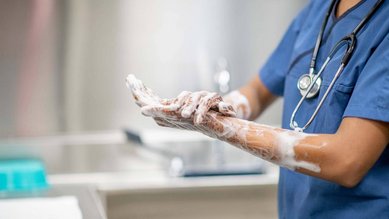
Regular handwashing, both before preparing food and between individual steps, reduces the risk of germs being passed from contaminated foods to other foods. This is particularly important when handling raw animal produce. It’s also important to avoid touching the mouth, nose or hair during food preparation so that no microorganisms are transferred to the food.
Important: Anyone who has a gastrointestinal infection should avoid preparing food for other people due to the risk of infection.
Raw plant-based foods, such as fruit, vegetables, herbs, sprouts and green salad, must also be washed carefully before consumption – ideally under running water. If vegetables that are grown in soil are eaten raw, peeling can further reduce the risk of infection. Sprouts and frozen berries can also be heated up before being eaten to kill microorganisms.
When handling food, different types of food should be stored and processed separately. It is particularly important to use separate kitchen utensils for raw fish and raw meat. Alternatively, chopping boards and knives can be washed thoroughly with warm water and dishwashing liquid between each step in the process of preparing the food. Chopping boards made of plastic rather than wood are better as they are easier to clean.
As packaging and thawing liquid from meat and poultry may contain many germs, they should be disposed of immediately, and anything that has come into contact with them should be cleaned without delay.
Animal produce and meal leftovers should always be properly cooked through or heated up in order to kill pathogens. This means that the internal temperature of the food should reach 70°C for at least 2 minutes. A meat thermometer can be used to test the temperature of meat. It is advisable to boil unpasteurized milk before consuming it. Raw eggs should be stored and prepared separately from other foods. Eggs should be heated thoroughly. Particular care is needed when preparing food with raw eggs, such as tiramisu or mayonnaise. These should only be made with clean eggs and should be consumed immediately.

Keeping food warm
When meals have to be kept warm for extended periods, the Federal Institute for Risk Assessment (BfR) recommends that the temperature be constantly maintained at 60°C on all sides. At temperatures below 60°C, many bacteria (such as Bacillus cereus) can multiply effectively and produce toxins.
When is particular caution required?
Healthy people who follow a few basic hygiene rules don’t generally need to worry about contracting a foodborne illness or food poisoning. However, certain groups of people are at an increased risk of becoming ill in this way. These include:
- people with a weakened immune system as a result of an illness or of taking certain medication
- those of older age
- babies and infants
- pregnant women and unborn babies
When preparing food for people in these groups, it is particularly important to ensure good food hygiene. There are also some additional things to consider for those at increased risk. For example, they should not eat any food past its best-before date. There are also some foods they should avoid, such as:
- unpasteurized milk and unpasteurized dairy products
- soft cheeses made from pasteurized milk if they have been using yellow or red smear bacteria, such as German “Handkäse”
- raw eggs or dishes made with raw eggs (e.g. tiramisu)
- raw meat and mince
- raw sausage, e.g. “Mettwurst” – an uncooked sausage made from ground pork
- smoked or raw fish, e.g. smoked salmon or sushi
The article Nutrition during pregnancy provides detailed information about other important aspects of nutrition during this special stage of life.
What to do if poisoning is suspected
If you are concerned that you or someone you know has ingested a poisonous substance, you should contact your local poison control center immediately. Poison control centers are contactable 24 hours a day.
For a complete overview of emergency phone numbers for poison control centers, see the website of the Federal Institute for Risk Assessment (BfR).
Where to go for more information about food hygiene
For more information and useful tips on preventing foodborne infections, see the consumer tips provided by the Federal Institute for Risk Assessment (BfR).
- Bundesamt für Verbraucherschutz und Lebensmittelsicherheit (BVL). Infektionen mit Campylobacter. Aufgerufen am 09.12.2025.
- Bundesamt für Verbraucherschutz und Lebensmittelsicherheit (BVL). Infektion mit EHEC. Aufgerufen am 09.12.2025.
- Bundesamt für Verbraucherschutz und Lebensmittelsicherheit (BVL). Infektion mit Listerien. Aufgerufen am 09.12.2025.
- Bundesamt für Verbraucherschutz und Lebensmittelsicherheit (BVL). Infektion mit Salmonellen. Aufgerufen am 09.12.2025.
- Bundesamt für Verbraucherschutz und Lebensmittelsicherheit (BVL). Vorsicht (nicht nur) mit rohen Eiern! – Hygienischer Umgang mit Eiern. Aufgerufen am 09.12.2025.
- Bundesamt für Verbraucherschutz und Lebensmittelsicherheit (BVL). Intoxikation durch Staphylokokkus aureus. Aufgerufen am 09.12.2025.
- Bundesamt für Verbraucherschutz und Lebensmittelsicherheit (BVL). Überblick über lebensmittelbedingte Infektionen und Intoxikationen. Aufgerufen am 09.12.2025.
- Bundesinstitut für Risikobewertung (BfR). Clostridien. Aufgerufen am 09.12.2025.
- Bundesinstitut für Risikobewertung (BfR). Schutz vor lebensmittelbedingten Erkrankungen beim Heißhalten von Speisen. Stellungnahme vom 27. August 2020.
- Bundesinstitut für Risikobewertung (BfR). Schutz vor Lebensmittelinfektionen im Privathaushalt. Verbrauchertipps. 2020.
- Bundesinstitut für Risikobewertung (BfR). Yersinien. Aufgerufen am 09.12.2025.
- Bundesinstitut für Öffentliche Gesundheit (BIÖG), infektionsschutz.de. Küchen- und Lebensmittelhygiene. Aufgerufen am 09.12.2025.
- Bundesinstitut für Öffentliche Gesundheit (BIÖG), infektionsschutz.de. Lebensmittelinfektion. Aufgerufen am 09.12.2025.
- Niedersächsisches Landesamt für Verbraucherschutz und Lebensmittelsicherheit (Laves). Clostridium perfringens. Aufgerufen am 09.12.2025.
- Niedersächsisches Landesamt für Verbraucherschutz und Lebensmittelsicherheit (Laves). Hygieneregeln im Haushalt. Aufgerufen am 09.12.2025.
- Robert Koch-Institut (RKI). Staphylokokken-Erkrankungen, insbesondere Infektionen durch MRSA. Aufgerufen am 09.12.2025.
- Robert Koch-Institut (RKI). Toxoplasmose. Aufgerufen am 09.12.2025.

In cooperation with the Federal Institute for Public Health (Bundesinstitut für Öffentliche Gesundheit, BIÖG).
As at: