Healthy living Hospital hygiene – preventing infections in medical facilities
People who are seriously ill or have recently had surgery are usually more at risk of infection. Various measures are taken to prevent infection with disease-causing microbes in hospitals and medical facilities. Read on to find out about typical hospital-acquired infections and the hygiene measures taken to prevent them.
At a glance
- Bacteria are the most common pathogens (disease-causing microbes) that cause infections in hospitals. Fungi and viruses are less common causes.
- Certain factors, such as age and the patient’s underlying condition, as well as the duration of surgery or use of antibiotics, can increase the risk of infection.
- Most pathogens in hospitals are transmitted by touch. This is why good hand hygiene is the best form of defense.
- Other important measures are cleaning and disinfection of surfaces, personal protection equipment and vaccinations for hospital staff, as well as isolation of infected patients and hygiene precautions during surgery.
- Specialist hygiene personnel monitor compliance with required hygiene measures.
What are hospital-acquired infections and what is hospital hygiene?
When pathogens such as bacteria, viruses or fungi enter the body, colonize it and multiply, this is known as an infection. Hospital-acquired infections (also known by medical professionals as “nosocomial infections”) are infections that patients pick up in a medical facility. These facilities include not only hospitals but also care and rehabilitation facilities and medical practices. However, as the risk of infection is higher in hospital settings, they are most commonly known as hospital-acquired infections (HAIs).
People are more likely to acquire infections in hospitals than in other settings because hospital patients often already have a weakened immune system, for example due to a serious illness or following surgery. As a result, their immune system may be unable to fight off infections caused by pathogens. It is then easier for them to become infected. If the required hygiene measures are not observed, fresh surgical wounds are also easily infected because these do not have a natural skin barrier to provide protection against the entry of pathogens into the body.
Protective measures must be taken to prevent patients in hospitals or other medical facilities from acquiring an infection due to pathogens. These measures are collectively referred to as “hospital hygiene”. All medical facilities must have trained hygiene personnel and a hygiene plan in place that lists all measures to prevent infection. In addition to hand hygiene, protective clothing, cleaning and disinfection play an important part. Hygiene standards must be upheld by medical staff, patients and visitors.

Which pathogens commonly cause hospital-acquired infections?
People can acquire infections with different pathogens – i.e. disease-causing microbes – in medical facilities such as hospitals. These pathogens may be bacteria, fungi or viruses. The most common hospital acquired infections are:
- infections of the lower respiratory tract, such as pneumonia
- surgical wound infections
- urinary tract infections due to urinary catheters
- diarrheal diseases
Bacteria
Most hospital-acquired infections are caused by bacteria. Most of these bacteria present no risk to healthy individuals. Many people carry these bacteria without becoming ill – for example, on the skin or in their gut. However, for people with a weakened immune system (e.g. following surgery), with a severe illness like cancer, or those taking certain medications, these bacteria can be dangerous.
The following types of bacteria are common causes of hospital acquired infections:
- Pseudomonas, in particular Pseudomonas aeruginosa: These bacteria are widespread in the environment. They can cause a range of infections, including pneumonia and wound infections.
- Enterococci: These are a group of intestinal bacteria that can infect various parts of the body.
- Klebsiella: These intestinal bacteria can cause infections such as pneumonia, urinary tract infections and meningitis.
- Clostridioides difficile: These intestinal bacteria can cause intestinal inflammation with severe diarrhea.
- Staphylococci, especially Staphylococcus aureus: These bacteria can cause wound infections and infections of the skin and other organs.
Fungi
Fungal infections in hospitals are less common. The most frequent fungal infections acquired in hospitals are caused by yeasts of the genus Candida, e.g. Candida albicans. For healthy people, this is another microbe that generally presents no risk. For most people, Candida albicans colonizes the skin and mucous membranes without causing any symptoms. However, it can cause an infection known as candidiasis in people who are already ill or in a weakened condition. This can affect various parts of the body, such as the mouth, skin or internal organs.
Viruses
Viruses transmitted via blood, such as hepatitis B, hepatitis C or HIV, are very rare in hospital due to the mandatory protective measures. Viral infections of the respiratory tract, such as flu (influenza), or viral diarrhea (e.g. norovirus infections) are more common in hospitals.
How are pathogens spread?
The individual characteristics of a pathogen determine how it is spread. Many pathogens are spread through contact with infected individuals, for example, through tiny droplets of saliva that are produced when talking, through direct skin contact (e.g. when shaking hands) or when a doctor is treating a patient.
Pathogens may also adhere to objects, such as door handles, toilet seats or medical devices and be transmitted through touch.
Important: Pathogens are frequently spread by touch. This is why good hand hygiene is so important in medical facilities – for staff, patients and visitors alike.
How great is the risk of a hospital-acquired infection?
In the European Union, around 6 percent of patients will pick up a hospital-acquired infection during a hospital stay. The figure for Germany is 4 percent. This corresponds to around half a million people, with between 10,000 and 20,000 dying from their infections every year. These statistics have remained stable over the past 10 years.
While hospital-acquired infections are a serious concern, only a small fraction of patients will be affected by one during their hospital stay. However, certain people with a weakened immune system generally have an increased risk of picking up infections, including during medical treatment.
These people include the following groups:
- older people
- people whose immune system is deliberately suppressed by medication, for example, following an organ or stem cell transplant
- people with certain underlying conditions, such as diabetes or AIDS
- smokers
- people suffering from malnutrition and people who are severely overweight (obese)
Catheters can also increase the risk of infection. Urinary catheters are responsible for almost two-thirds of urinary tract infections acquired in hospital. Many medical treatments involve the use of venous catheters, for example, to administer fluid or medication into a patient’s vein. The skin’s protective barrier is broken at the catheter’s entry point. As a result, pathogens can enter the body at this point if adequate hygiene measures are not followed when the catheter is inserted. A bloodstream infection (sepsis) may then develop, starting at the catheter site. The risk of infection increases with the amount of time the catheter remains in the patient’s body.
During surgery, pathogens that occur naturally in certain areas of the patient’s body may move to other areas where they are not normally found. The skin and gut are normally host to a large number of bacteria. During bowel surgery, for example, or any time an incision is made in the skin (as happens during most surgical procedures), the surgical site may become infected with bacteria if the necessary protective measures are not followed.
Another factor that increases the risk of infection is use of antibiotics within the past 90 days or during the hospital stay. Antibiotics not only kill harmful bacteria but also “friendly”, useful bacteria that live on the skin and in the gut, thereby changing the person’s microbiome. This makes it easier for disease-causing bacteria and fungi to colonize the body and multiply. Treatment with antibiotics is a key risk factor for clostridioides difficile infections in particular.
Video What is the microbiome?
Watch this video to find out more about the microbiome and its functions in the human body.
This and other videos can also be found on YouTube
Watch nowThe privacy policy indicated there applies.
Why do antibiotic-resistant pathogens present a particular problem?
A particular risk is posed by antibiotic-resistant – and especially multidrug-resistant – bacteria. These bacteria are resistant to many or even all available antibiotics. Infections with resistant bacteria are difficult and, in some cases, impossible to treat. Antibiotic-resistant bacteria include:
- Methicillin-resistant Staphylococcus aureus (MRSA)
- Cephalosporin-resistant enterobacteria (ESBL), such as Klebsiella pneumoniae
- Vancomycin-resistant enterococci (VRE), such as Enterococcus faecium
- Carbapenem-resistant acinetobacter and Pseudomonas aeruginosa
Germany recently recorded an annual total of almost 150,000 infections with multidrug-resistant bacteria. While the total figure has risen over recent years, infections with certain pathogens, such as MRSA and clostridioides difficile, have decreased in number. This is partly due to various measures implemented in accordance with the German Antimicrobial Resistance Strategy “DART 2030”, including appropriate use of antibiotics. The strategy aims to reduce resistant pathogens and avoid infections.
How is infection control ensured?
In Germany, the Infectious Diseases Protection Act (“Infektionsschutzgesetz”, IfSG) and the medical hygiene regulations (“Hygieneverordnungen”) in place in the individual federal states provide a legal basis for hospital hygiene and all related measures. The recommendations of the Commission for Infection Prevention and Hygiene in Healthcare and Nursing (KRINKO) also have an important part to play. Medical facilities are required to employ specialist hygiene staff. This includes a hospital hygienist, for example. Hospital hygienists are doctors with specialized knowledge of hospital hygiene and microbiology. Their duties include monitoring compliance with hygiene measures, advising on issues relating to hospital hygiene, training hospital staff and coordinating the development of hygiene plans.
Medical facilities also need to have a hygiene plan in place, which defines all required hygiene precautions. The facility’s hygiene committee advises on the measures required. The committee comprises, among others, doctors, the hospital hygienist, nursing staff and specially trained hygiene staff.
What measures are used to prevent infection in healthcare facilities?
Measures to prevent infection must be implemented in all areas of the medical facility and apply to everyone in the facility, including doctors, nurses and other medical staff, as well as patients and visitors.
Hand hygiene
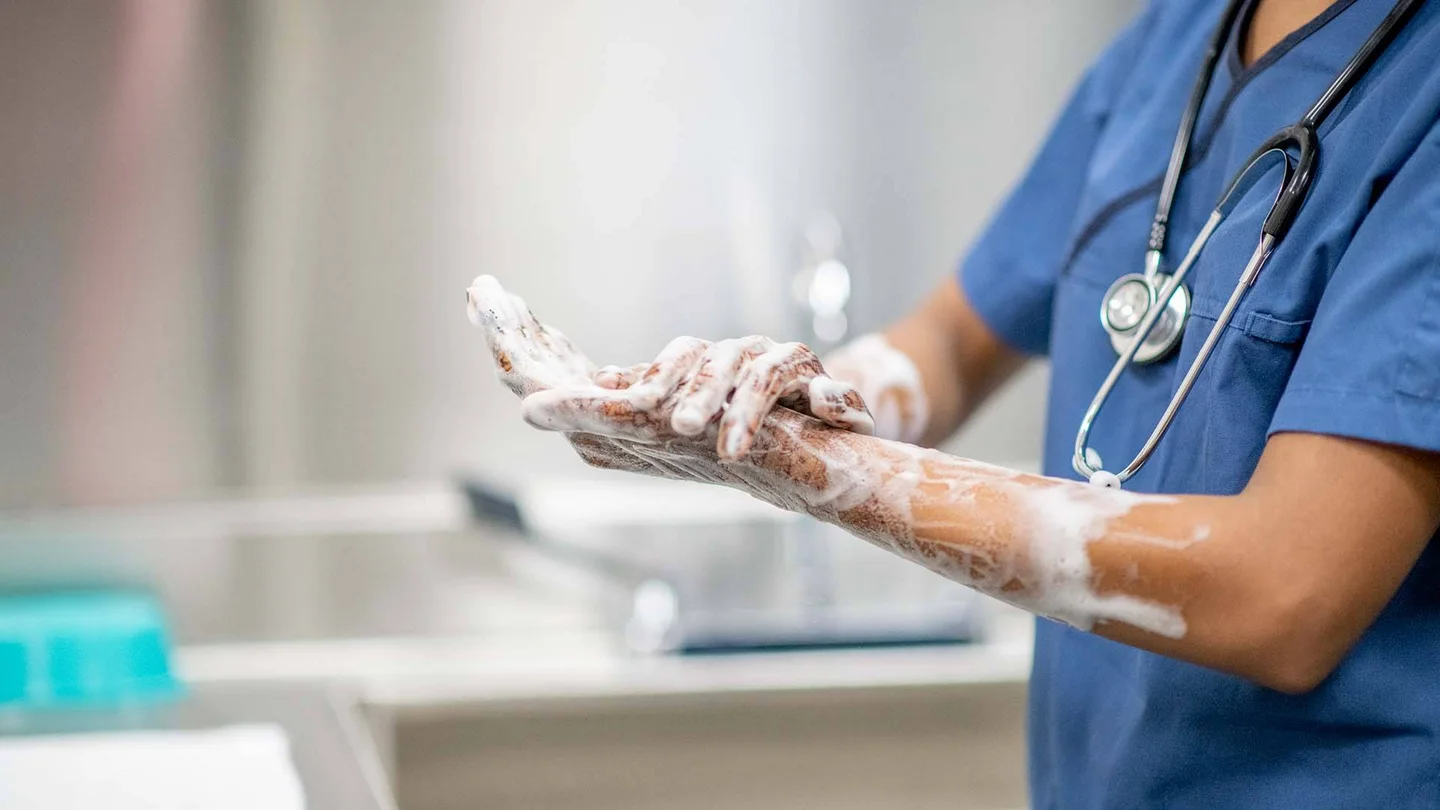
Good hand hygiene plays a particularly important role in protecting yourself and others from infection.
Thorough handwashing with soap is generally sufficient in everyday life. However, in medical facilities, it is sometimes necessary for patients or visitors to not only wash their hands but to also use a disinfectant handrub. The Commission for Infection Prevention and Hygiene in Healthcare and Nursing (KRINKO) recommends that patients and visitors disinfect their hands in the following situations:
- when entering the patient’s room
- when leaving the patient’s room
- before eating
- after using toilet facilities
- before and after contact with wounds or mucous membranes, for example, in the mouth and nose
- before entering high-risk areas
- after contact with surfaces, if this contact cannot be avoided
Important: For medical staff, thorough disinfection of the hands is essential, for example, before and after all contact with patients, as well as after contact with body fluids, such as blood.
The following instructions should be followed when disinfecting hands:
- Remove rings from fingers beforehand.
- How much disinfectant to use: Use as much as can fit into the palm of a cupped hand (3-5 ml) to ensure that the entire surface of both hands is covered for a sufficient amount of time.
- For most disinfectants, the recommended application time is 30 seconds.
- Particular attention should be paid to the fingertips, nail beds and thumbs when rubbing the hands with disinfectant.
- Remember to also rub between the fingers.

More information (in German and English) about hand hygiene in hospitals is provided on the website of the national hand hygiene campaign “Aktion Saubere Hände”.
Contact with (potentially) infected patients
Some people are at increased risk of colonization by critical pathogens even before they are admitted to hospital. For example, around 1 to 2 percent of adults carry MRSA on their skin or mucous membranes. However, MRSA is more commonly found among people with skin conditions such as neurodermatitis or among farmers than among the general population. For at-risk individuals, KRINKO recommends a screening test for the relevant pathogens when they are admitted to hospital.
Patients who are known or suspected to be carrying critical pathogens, such as MRSA or Clostridioides difficile, are normally cared for in a single room. When entering the room of a person who is carrying or infected with these pathogens, both hospital staff and visitors should wear a protective gown with long sleeves and disposable gloves. Any care aids or medical devices needed (such as a thermometer) should be left in the patient’s room if possible. Any materials or items that are needed for other patients must be disinfected thoroughly after use.
Vaccination of medical staff
Medical staff are vaccinated against infectious diseases as an infection control method to supplement hygiene measures. Anyone who works in a healthcare facility must be vaccinated against measles or be immune to it. Various vaccinations are required or recommended, depending on how often staff come into contact with patients and, especially, how often they have contact with particularly at-risk patient groups (e.g. in intensive care units). For those who have regular contact with particularly high-risk patient groups, these include vaccinations against hepatitis A, hepatitis B, mumps, rubella, chickenpox, flu and whooping cough and, where necessary, against the SARS-CoV-2 coronavirus (COVID-19). However, directors of healthcare facilities can also make further vaccinations a requirement for their staff if they regard these as essential to the prevention of infectious diseases. KRINKO recommends a generally high level of vaccination coverage among staff in medical facilities in order to provide the best possible protection for patients from infectious diseases.
What special protective measures are taken during surgery?
Hygiene is particularly important during surgery. Wound infections following surgery are among the most common hospital-acquired infections. For this reason, many precautions and measures are taken to ensure that patients are protected from infection as effectively as possible during surgery.
Hygiene measures for staff
Any person entering the operating room must wear special surgical clothing (scrubs) and shoes. Before a surgical procedure, all staff must also put on a surgical face mask over their nose and mouth and cover their hair in a hair net. Before entering the operating room, all surgical staff must also wash their hands and forearms and disinfect them with a disinfectant handrub, using the proper application technique and for the amount of time specified by the manufacturer. This procedure is referred to as surgical hand disinfection. Once their hands and forearms are completely dry, staff must put on sterile disposable gloves.
Interesting fact: Sterile means that devices and materials, such as dressings, for example, are completely free of all microorganisms and pathogens, i.e., “microorganism-free”.
Preparations for patients
Before surgery, the patient’s skin around the surgical site is washed thoroughly and treated with special antiseptic skin solution. This step is intended to prevent pathogens that live on the skin from entering the surgical wound.
Materials, devices and operating room
All materials and devices used in the operating room are either disposable products or are sterilized following each use. Sterilization is performed by specially trained and qualified employees. In addition, the entire operating room, including the floor, is disinfected after each operation.
Where to go for more information about hospital hygiene
The website keine-keime.de provides extensive information about hospital hygiene, including videos and an interactive graphic (in German).
- Bundesministerium für Gesundheit (BMG). Krankenhaushygiene. Aufgerufen am 26.11.2025.
- Dettenkofer M, Frank U, Just H-M, et al. Praktische Krankenhaushygiene und Umweltschutz. 4. Auflage. Springer: Berlin 2018.
- Deutsche Gesellschaft für Krankenhaushygiene e.V. (DGKH). Stellungnahme der Deutschen Gesellschaft für Krankenhaushygiene (DGKH) zu „Antibiotikaresistenzen und Neue Teststrategien". Juli 2023.
- Kommission für Krankenhaushygiene und Infektionsprävention (KRINKO) und Robert-Koch-Institut (RKI). Personelle und organisatorische Voraussetzungen zur Prävention nosokomialer Infektionen. Bundesgesundheitsblatt 2023, 66:332–351.
- Kommission für Krankenhaushygiene und Infektionsprävention (KRINKO) und Robert-Koch-Institut (RKI). Impfungen von Personal in medizinischen Einrichtungen in Deutschland: Empfehlung zur Umsetzung der gesetzlichen Regelung in § 23a Infektionsschutzgesetz. Bundesgesundheitsblatt 2021, 64:636–642.
- Kranz J, Schmidt S, Wagenlehner F et al. Catheter-associated urinary tract infections in adult patients. Preventive strategies and treatment options. Deutsches Aerzteblatt International 2020. 117: 83–8.
- Robert Koch-Institut (RKI). Antworten auf häufig gestellte Fragen zu Krankenhausinfektionen und Antibiotikaresistenz. Aufgerufen am 26.11.2025.
- Robert Koch-Institut (RKI). Clostridioides difficile. Aufgerufen am 26.11.2025.
- Staphylokokken-Erkrankungen, insbesondere Infektionen durch MRSA. RKI-Ratgeber. Aufgerufen am 26.11.2025.
- Sikora A, Zahra F. Nosocomial Infections. Treasure Island (FL): StatPearls Publishing. August 2025.
As at: