Healthy living Nutrition during pregnancy
The baby’s development depends on the health and behavior of the expectant mother. Nutrition plays a major role. This article explains which nutrients are particularly important and which foods pregnant women should avoid.
At a glance
- Expectant mothers should eat as balanced a diet as possible in order to provide their babies with all the nutrients they need. In principle, the same rules for healthy eating that apply to the general female population also apply during pregnancy.
- However, a woman’s body needs larger quantities of certain vitamins and minerals during pregnancy. The most important of these are folic acid and iodine.
- If animal-derived foods are not consumed, care must be taken to ensure an adequate supply of iron, vitamin B12, and zinc.
- Raw animal-derived products, such as unpasteurized milk and cheese, meat, sausage, raw fish and uncooked eggs, should be avoided by pregnant women (due to the risk of infection).
- Poppy seeds, licorice, and caffeinated drinks should only be consumed in small quantities during pregnancy.
- A woman’s calorie requirements only increase slightly and not until the final months of pregnancy. This means that pregnant women shouldn’t begin eating more than usual, especially if they aren’t very physically active.
Note: The information in this article cannot and should not replace a medical consultation and must not be used for self-diagnosis or treatment.
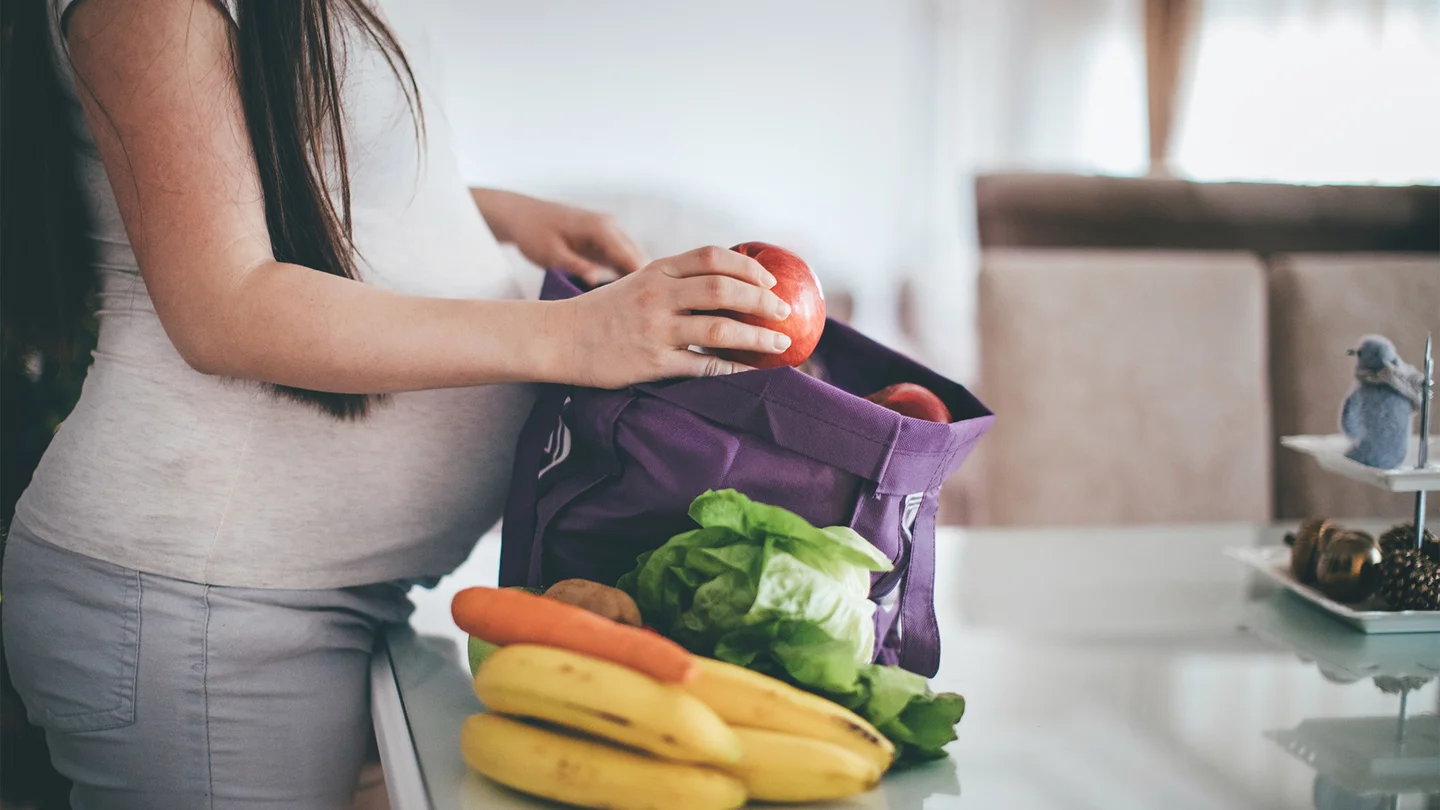
What role does nutrition play during pregnancy?
A healthy and high-quality diet is particularly important during pregnancy, as it benefits the health of both the mother and the baby. Anyone who eats a balanced diet during pregnancy has no real need to worry. There are only a few things to keep in mind.
In general, pregnant women should eat a diet including plenty of fruit and vegetables, animal-derived foods in moderation, and a small number of sweet treats and snacks. Expectant mothers should completely avoid certain foods, such as raw animal products, so as not to put their babies at risk. As a rule, additional intake of folic acid and iodine is also necessary to meet the special mineral and vitamin requirements during pregnancy.
How do vitamin and nutrient requirements change during pregnancy?
Calorie requirements increase slightly from the second trimester of pregnancy onward. However, at this point, many pregnant women also exercise significantly less than before and burn fewer calories as a result. This means that, in most cases, there’s no need to eat more than usual. Later in pregnancy, it’s also better to eat lighter meals more frequently throughout the day than to eat a small number of large meals. As the baby grows, increasing pressure is placed on the woman’s stomach and intestines within the abdominal space.

A woman’s body needs larger quantities of certain vitamins and minerals during pregnancy. The most important of these are folic acid and iodine. However, iron, long-chain omega-3 fatty acids, and vitamin D are also important. Your gynecologist will discuss with you which supplements you need and what dosage is appropriate for you.
An additional intake of folic acid and iodine is recommended for almost all pregnant women
Folic acid and iodine should be taken by almost all pregnant women in addition to eating a balanced diet. In many cases, the body’s increased requirements cannot be met by diet alone. A folic acid or iodine deficiency comes with a high risk of developmental disorders in the baby and should be avoided at all costs. The German Nutrition Society (Deutsche Gesellschaft für Ernährung, DGE) therefore recommends an additional intake of 400 micrograms of folic acid by the end of the first trimester of pregnancy.
If possible, folic acid supplements should be started before pregnancy begins. This B vitamin is needed in early pregnancy in particular. It can take several weeks until the required concentration is reached in the blood. If a woman only begins taking folic acid either shortly before or after conception, the DGE recommends taking a higher dose of 800 micrograms.
The recommendation for additional iodine is 100 to 150 micrograms per day. However, the recommendation for iodine does not apply to women with thyroid disease. In this case, it is important to talk to a doctor before taking iodine.
Important: Pregnant women should avoid seaweed and seaweed products containing iodine because the iodine content of seaweed can vary significantly and it may also contain arsenic and other harmful substances.
Only take other preparations if a deficiency is detected
An iron deficiency can also cause complications during pregnancy. For this reason, iron levels are checked during prenatal check-ups. Most pregnant women can meet their iron requirements by eating a balanced diet. Meat in particular contains easily digestible iron. The body is less able to utilize iron from plant foods. As a result, iron levels should be carefully monitored in women who follow vegetarian or vegan diets. However, an iron supplement should only be taken after a deficiency has been diagnosed by a doctor, as excessive iron intake can also have negative effects on health.
Some studies have shown that long-chain omega-3 fatty acids such as docosahexaenoic acid (DHA) can reduce the risk of premature birth. In addition, DHA is important for the development of visual function and the brain development before birth. Vegetable oils, especially flaxseed oil, and oily sea fish such as salmon, mackerel, and herring are particularly rich in omega-3 fatty acids. The German Nutrition Society (DGE) recommends that women who don’t eat oily fish regularly take a supplement containing DHA.
A vitamin D deficiency is now widespread in northern industrialized nations. However, it is unclear whether vitamin D deficiency affects pregnancy or whether taking vitamin D supplements can cause harmful side effects.
The best way to ensure an adequate supply of vitamin D is to spend enough time outdoors. The following actions are therefore recommended:
- Expose your face, hands and arms to the sun without any sunscreen two to three times per week.
- The length of exposure to the sun should be half the time it would usually take to get sunburned when not using sunscreen.
- The exact amount of time depends, among other things, on skin type, time of year and time of day – for example, between 5 and 60 minutes for people with light skin from March to October.
People who don’t regularly spend time outdoors in the sun or who belong to a group that is at a particularly high risk of vitamin D deficiency should get their vitamin D level tested. If a vitamin D deficiency is detected, the DGE recommends taking 20 micrograms of vitamin D per day. This recommendation also applies to pregnant and breastfeeding women. It’s best to talk to a doctor if you have any questions about vitamin D intake.
For more in-depth information on nutrient requirements and recommended supplements during pregnancy, visit the websites of the DGE (German Nutrition Society) and the consumer advice center.
What should you be aware of if you follow a vegetarian or vegan diet?
In Germany, more and more people are adopting a vegetarian or vegan diet. A meat-free diet is particularly popular among young women of childbearing age. As a result, the question of how to manage vegetarian and vegan diets during pregnancy is becoming increasingly important. Firstly, a distinction must be made between vegetarian diets (no fish or meat) and vegan diets (no animal products).
Vegetarian diet – pay attention to iron, vitamin B12, and zinc
A vegetarian diet that includes eggs and dairy products (i.e. an ovo-lacto vegetarian diet) typically offers an adequate amount of nutrients without any dietary supplements, except for folic acid and iodine. However, special attention should be paid to iron, vitamin B12, and zinc, as these three nutrients are primarily found in meat products.
Due to the increased risk of iron deficiency, pregnant women following a vegetarian diet should eat iron-rich foods like legumes or whole-grain products, together with foods rich in vitamin C like citrus fruits. This helps the body to absorb iron more efficiently. Supplements are available if you are found to have an iron, vitamin B12 or zinc deficiency.
Vegan diet – some nutritional supplements are needed
The recommendations made for vegetarians also apply to vegans, but with some additions: taking vitamin B12 supplements is a must for pregnant women following a completely plant-based diet, as this vitamin is found almost exclusively in meat, fish and dairy products.
Since vegans also do not eat calcium-rich animal products, they should eat ample calcium-rich plant foods such as dark-green vegetables (e.g. broccoli). Calcium-fortified foods, such as fruit juices and breakfast cereals, or dietary supplements can also be taken.
Vegan women should have their vitamin and mineral levels checked during pregnancy and have a consultation with a qualified nutritional counselor, ideally before a planned pregnancy.
Important: Pregnant women and women planning a pregnancy who, for personal or health reasons, abstain from certain foods, can seek support from a qualified nutritional counselor. This helps ensure that their babies receive all the essential nutrients.
For further useful information about vegetarian and vegan diets during pregnancy, visit the familienplanung.de website operated by the Federal Institute for Public Health.
What foods should pregnant women avoid?
It is generally known that pregnant women should avoid alcohol and other drugs during pregnancy and while breastfeeding. However, some other foods should also be avoided during pregnancy. The reason for this is they may possibly be contaminated with certain pathogens that can trigger infections. Certain foods should also be consumed only in small quantities, as some of their ingredients may be harmful to the unborn baby.

Unpasteurized milk, raw meat and raw fish products
Raw animal-derived products may contain Listeria bacteria or Toxoplasma parasites. These pathogens, which are usually harmless to adults, can be dangerous for the unborn baby because they can cause listeriosis or toxoplasmosis. Listeria can, for example, cause meningitis or a blood infection (sepsis). Toxoplasma, meanwhile, can impair the development of the baby’s brain and eyes. In addition, both of these pathogens can result in miscarriages and premature births.
Listeria is mainly found in unpasteurized dairy products, including cheeses such as camembert, brie, feta and roquefort. Therefore, pregnant women should avoid eating these and other cheeses made from unpasteurized milk. Toxoplasma may be present in raw sausage products such as salami or in smoked fish. Therefore, meat and fish should only be consumed after it has been thoroughly cooked. However, toxoplasmosis can also be triggered by eating unwashed fruit and vegetables. It is therefore recommended that fruit and vegetables be washed thoroughly, especially during pregnancy.
Raw eggs and poultry
Eggs can contain Salmonella bacteria. These bacteria can be dangerous for the unborn baby because they can cause an infection called salmonellosis. Therefore, eggs should only be consumed during pregnancy if they have been fully cooked. The same applies to poultry meat. Pregnant women should also avoid foods containing raw eggs.
Liver
Eating liver can harm the baby in the first trimester of pregnancy and should therefore be avoided completely during this period. The reason for this is that it contains significant amounts of vitamin A. Although vitamin A is important for development, too much of it is harmful to the baby, especially in the early stages of pregnancy. From the second trimester onward, pregnant women can eat liver again, but only in small quantities (no more than 125 grams per week).
Poppy seeds
In the past, poppy seeds could be contaminated with morphine during production. These days, poppy seeds are washed thoroughly during processing, so that the risk of them containing morphine is much lower. To be on the safe side, the Federal Institute for Risk Assessment recommends that pregnant women should avoid eating large quantities of poppy seeds, for example, in poppy-seed cake. However, eating small amounts of poppy seeds – especially if baked – is no cause for concern. It’s also safe to eat baked goods made with poppy seeds from a bakery because most bakeries use industrially processed poppy-seed paste.
Licorice
As licorice contains glycyrrhizin, eating excessive amounts can cause side effects such as high blood pressure and water retention – regardless of pregnancy. Glycyrrhizin is also suspected of having a negative effect on the development of the unborn baby. However, research studies have not yet been able to establish a clear connection. The Federal Institute for Risk Assessment therefore recommends that pregnant women avoid consuming large quantities of licorice regularly.
Caffeinated drinks
Beverages containing caffeine, such as coffee, black and green tea and cola, should be enjoyed in moderation during pregnancy. Excessive caffeine intake appears to delay the baby’s growth and reduce birth weight. The risk of miscarriage also increases significantly at caffeine intakes of 300 milligrams or more per day (about 3 to 4 cups of coffee). Up to 200 milligrams of caffeine per day is considered safe. This corresponds to about 2 large cups of coffee (200 ml each) or 1.3 liters of green tea.
How much weight gain is “normal”?
Weight gain during pregnancy is completely normal. Not all of it is due to the weight of the growing baby and placenta or the infamous “cravings” that some women experience. Most weight gained during pregnancy is actually due to additional fluid in the body, including amniotic fluid and fluid retention in the body’s tissues.
Women gain more weight as their pregnancies progress. No general recommendation can be made as to how many kilos can or should be gained. The recommendations are based more on how much a woman weighed before pregnancy, i.e. whether she was underweight, overweight or of average weight. The body mass index (BMI) is also decisive. For average-weight women (BMI between 18.5 and 24.9), a weight gain of between 11.5 and 16 kilograms is considered normal. Underweight women (BMI below 18.5) may even gain up to 18 kilograms during pregnancy. However, for severely overweight (obese) women with a BMI over 30, weight gain during pregnancy should not exceed 9 kilograms.
Risks associated with gaining too much or too little weight
A very significant weight gain during pregnancy increases the risk of complications during the birth, as well as the risk of developing gestational diabetes, for example. On the other hand, a pregnant women who gains too little weight can also put both her own health and the health of the baby at risk, possibly leading to a premature birth or low birth weight.
Important: Gaining weight very quickly during pregnancy (about 1 kilogram per week) can be a sign of increased water retention and must be discussed with a doctor. This can be indicative of pre-eclampsia, a potentially life-threatening condition. Rapid medical treatment is important in this case to protect the mother and the baby. Significant weight gain can also be an indicator of gestational diabetes and should be checked by a doctor.
For further information about gaining weight during pregnancy, visit gesundheitsinformation.de.
Further information
Our article on Pregnancy dos and don’ts explains in more detail what is allowed and what must be avoided during pregnancy.
The National Action Plan’s internet portal IN FORM – German national initiative to promote healthy diets and physical activity offers articles and tips on exercise and healthy eating (in German).
The brochure Essen, Trinken und Bewegen in der Schwangerschaft (“Eating, drinking and moving during pregnancy”) published by the “Healthy Start Network” (Netzwerk Gesund ins Leben) provides recommendations in picture format for nutrition and exercise during pregnancy. This brochure is also suitable for women with little to no knowledge of German.
- Bundesinstitut für Öffentliche Gesundheit (BIÖG). familienplanung.de. Ernährung in der Schwangerschaft. Aufgerufen am 20.08.2025.
- Bundesinstitut für Öffentliche Gesundheit (BIÖG). familienplanung.de. Ernährungsrisiken in der Schwangerschaft. Aufgerufen am 20.08.2025.
- Bundesinstitut für Öffentliche Gesundheit (BIÖG). familienplanung.de. Gewicht und Gewichtszunahme in der Schwangerschaft. Aufgerufen am 20.08.2025.
- Bundesinstitut für Öffentliche Gesundheit (BIÖG). familienplanung.de. Vegetarische und vegane Ernährung in der Schwangerschaft. Aufgerufen am 20.08.2025.
- Deutsche Gesellschaft für Ernährung e.V. (DGE). Handlungsempfehlungen - Ernährung in der Schwangerschaft. Aufgerufen am 20.08.2025.
- Deutsche Gesellschaft für Ernährung e.V. (DGE). Referenzwerte: Vitamin D. Aufgerufen am 20.08.2025.
- Institut für Qualität und Wirtschaftlichkeit im Gesundheitswesen (IQWiG). gesundheitsinformation.de. Gewichtszunahme in der Schwangerschaft. Aufgerufen am 20.08.2025.
- Robert Koch-Institut (RKI). Antworten des Robert Koch-Instituts auf häufig gestellte Fragen zu Vitamin D. Aufgerufen am 20.08.2025.
- Verbraucherzentrale. Jod, Folsäure, Eisen und Co - welche Nahrungsergänzungen brauchen Schwangere? Aufgerufen am 20.08.2025.

Reviewed by the German Midwifery Association (Deutscher Hebammenverband e.V.).
As at: